This posting wound up being much bigger than I imagined, and it still does not cover it all. Food was such an important part of our six-week experience.
Convenience Stores
Convenience stores or konbini became a staple for us while in Misawa. For your information: As of July 2021, there are 55,931 convenience stores in Japan, up from just 1,000 in 1970. The top three include 7-Eleven, Lawson and FamilyMart. Many items available in larger supermarkets can be found in Japanese convenience stores, though the selection is usually smaller. The following services are also commonly available:
- Courier and postal service.
- Photocopying and fax service.
- Automated teller machines.
- Payment service for utilities and other bills and taxes.
- Ticket service for concerts, theme parks, airlines etc.
- Pre-paid cards for cellular phones.
Items NOT commonly sold include: Slurpees, lottery tickets, car supplies and gasoline. Japan has one convenience store for every 2,000 people, while in the United States it is one per 8,000 people. Also, because Japan has a lower crime rate, store owners are not reluctant to keep stores open at late hours in the night and customers are not reluctant to shop during those times.

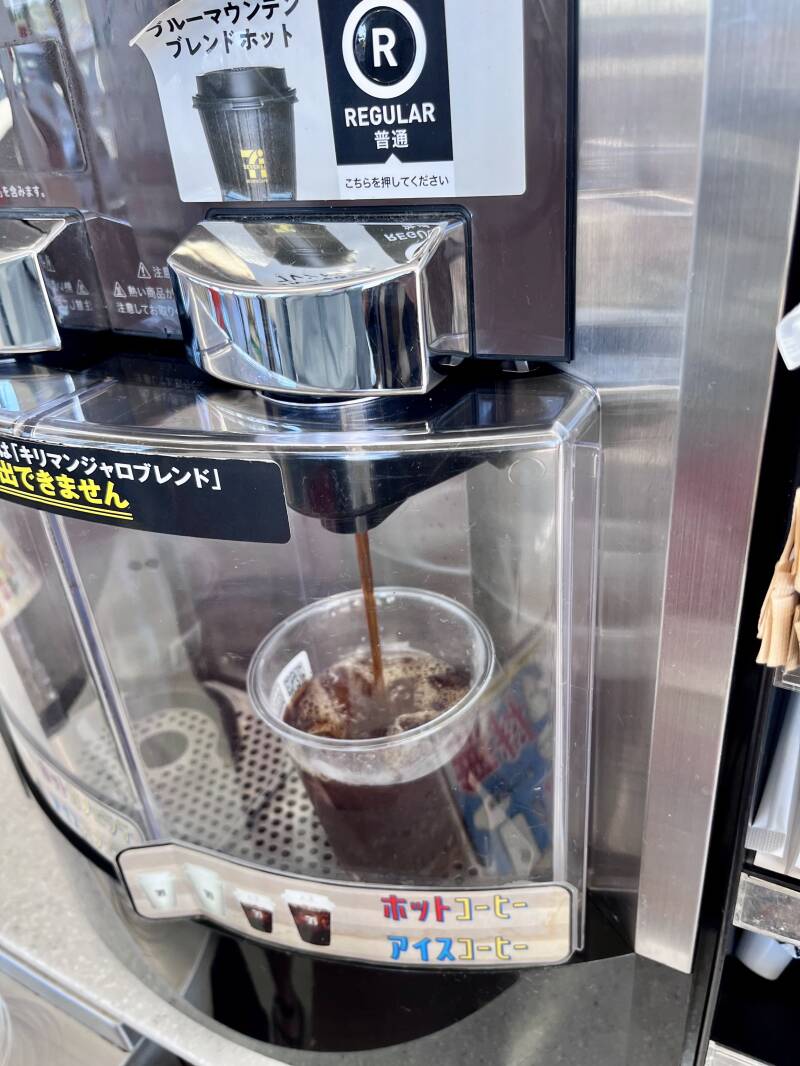
We'd hit up a konbini to use an ATM for cash, grab a coffee and even lunch a few times. Here's the thing about Japan: One does not walk or drive while eating. It was common to see folks hanging out around the front of the store or sitting in a car in the parking lot consuming their food. The cashier was happy to heat up your meal if need be with the microwave oven behind the counter.
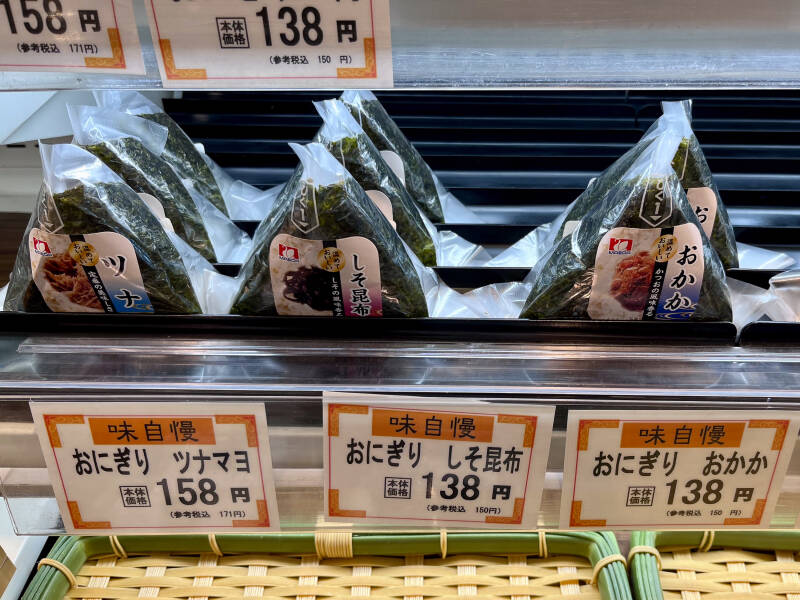
This turned into one of my favorite konbini meals, a triangle of rice wrapped in seaweed and a filler of either salmon salad, tuna salad, or a plum mixture. These were delicious. Egg salad sandwiches were also a favorite of mine while Ellen enjoyed the fried chicken and meat skewers.
Drugstores
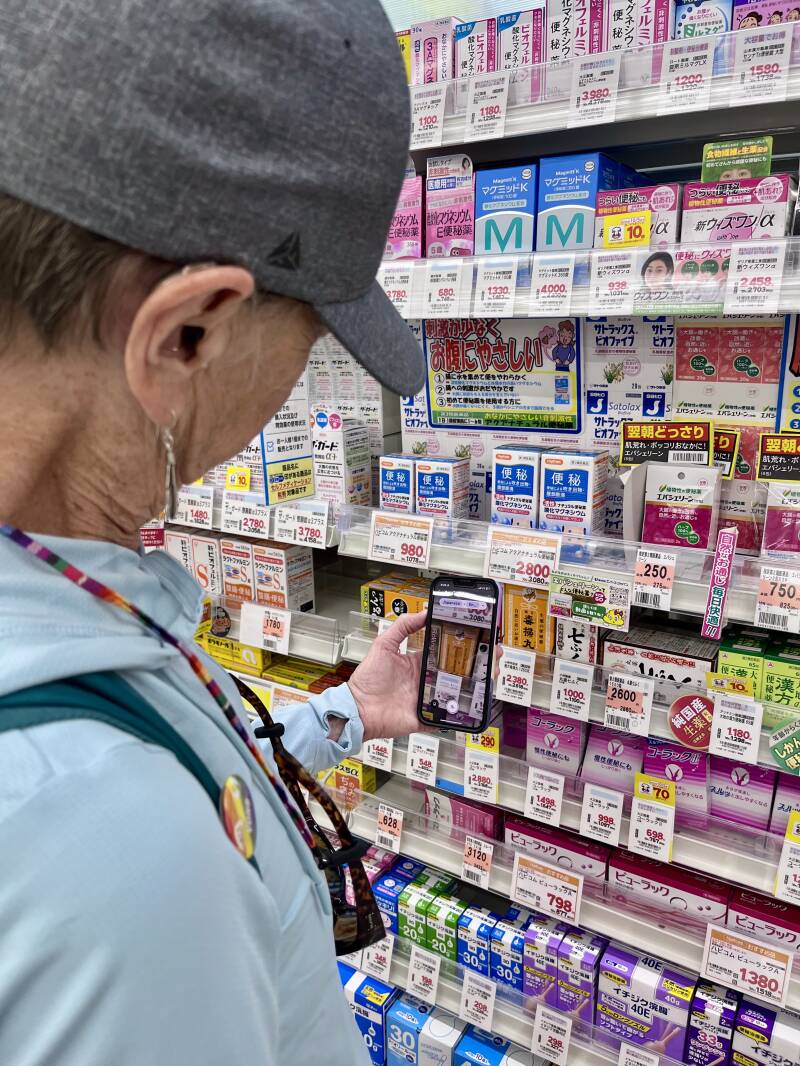
Ellen is using Google Translate to search for something at the drugstore. Other than the usual items found in drugstores I was struck by the amount of alcohol one could purchase.
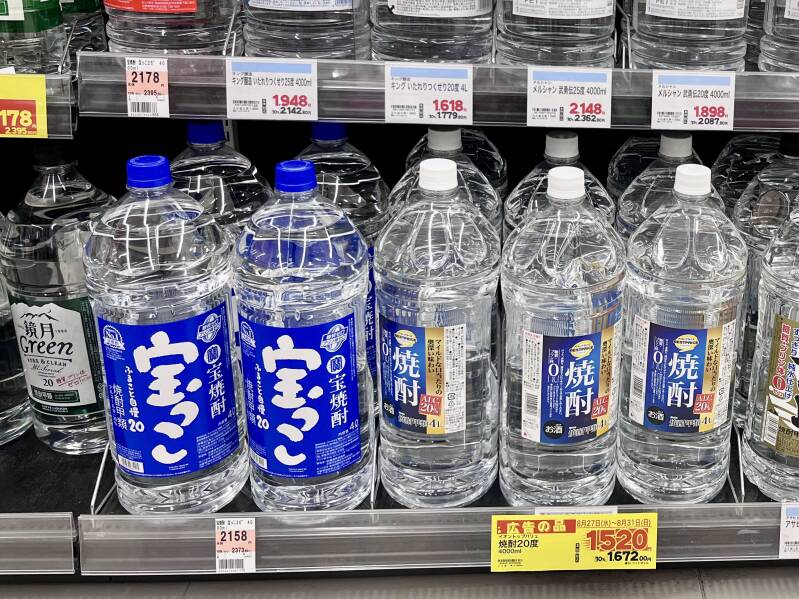
The picture to the right is obviously whisky but it took me a minute to realize the above bottles weren't water but vodka. These are four liter bottles!
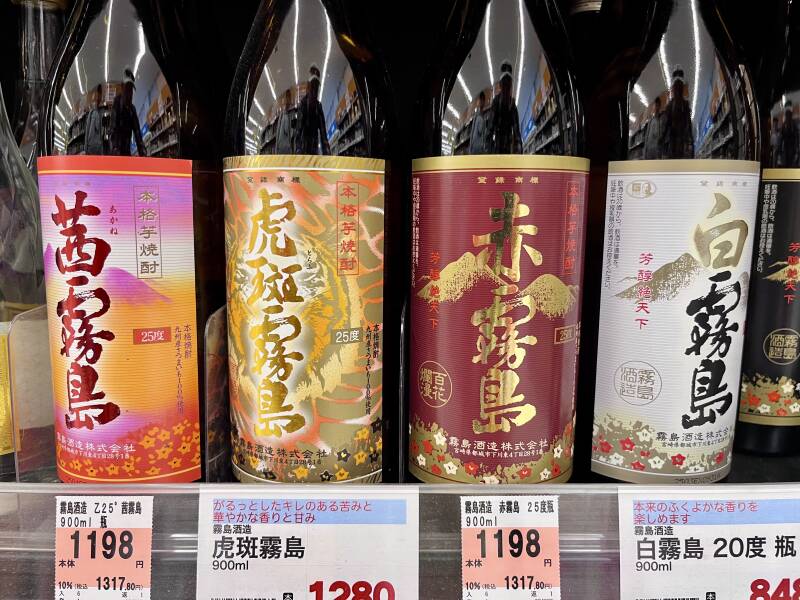
Wine labels I thought were cool. At least I think this is wine...
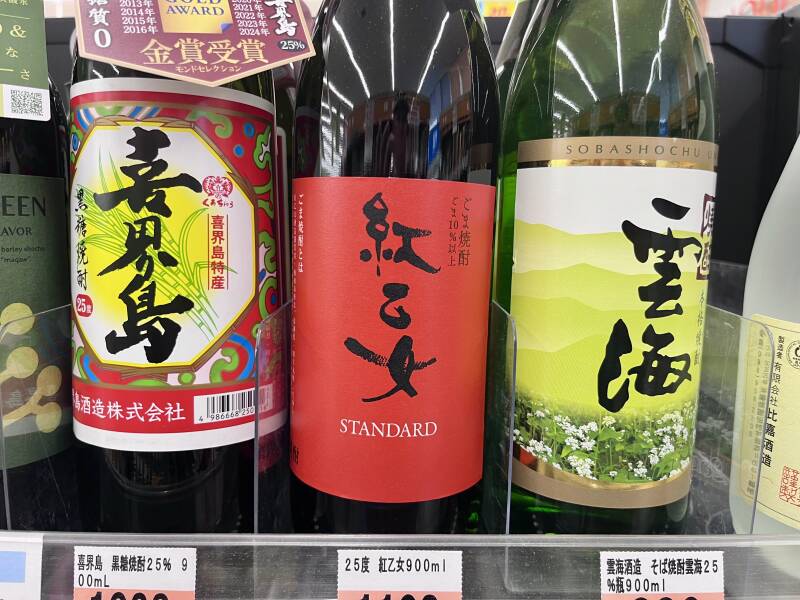

Grocery Stores
Going to the grocery store was a great experience if not a bit overwhelming in the visual department. Here's how we would roll: Sunday's with the Nelson family were "get ready for the week" days. Together, the four of us would create a menu for the week. Mike and Kamalene would gather supplies at the commissary at the Misawa Air Base and we would hit the local stores in search of what was on our list. Below is a sampling of what we would see:

Giant bags of rice. Not really available in 1 lb bags like back home.
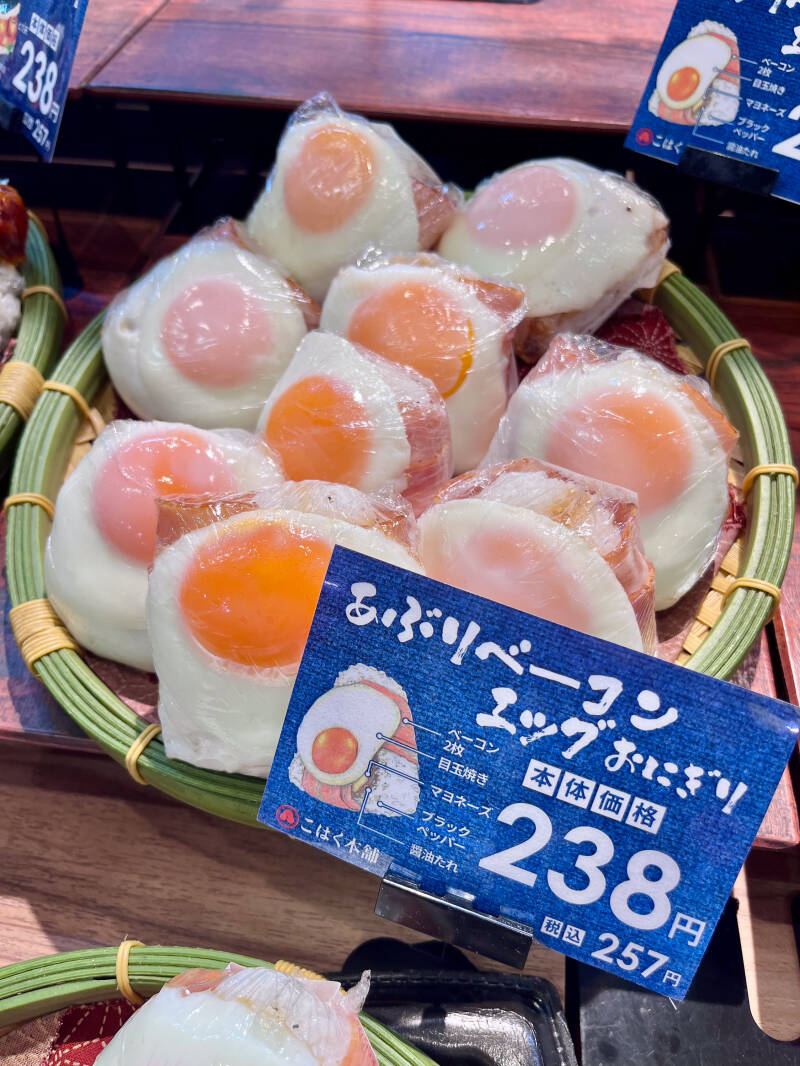
An egg and rice ball.
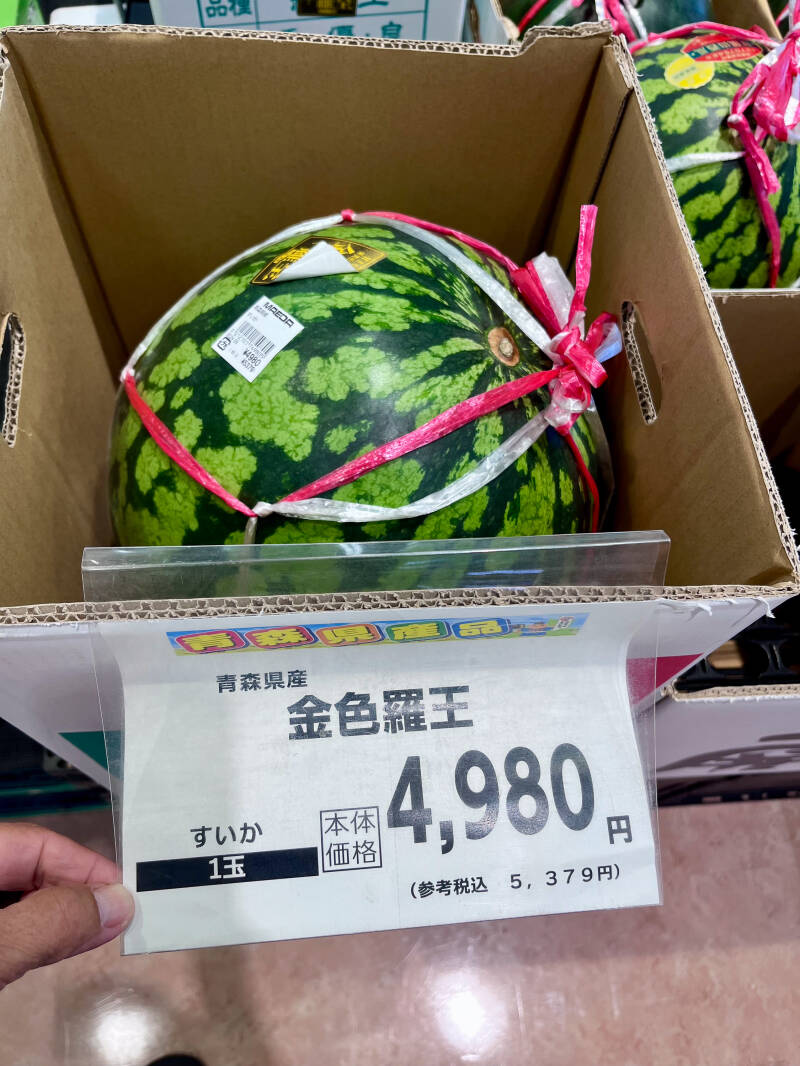
This is a $32 watermelon that we did not purchase.
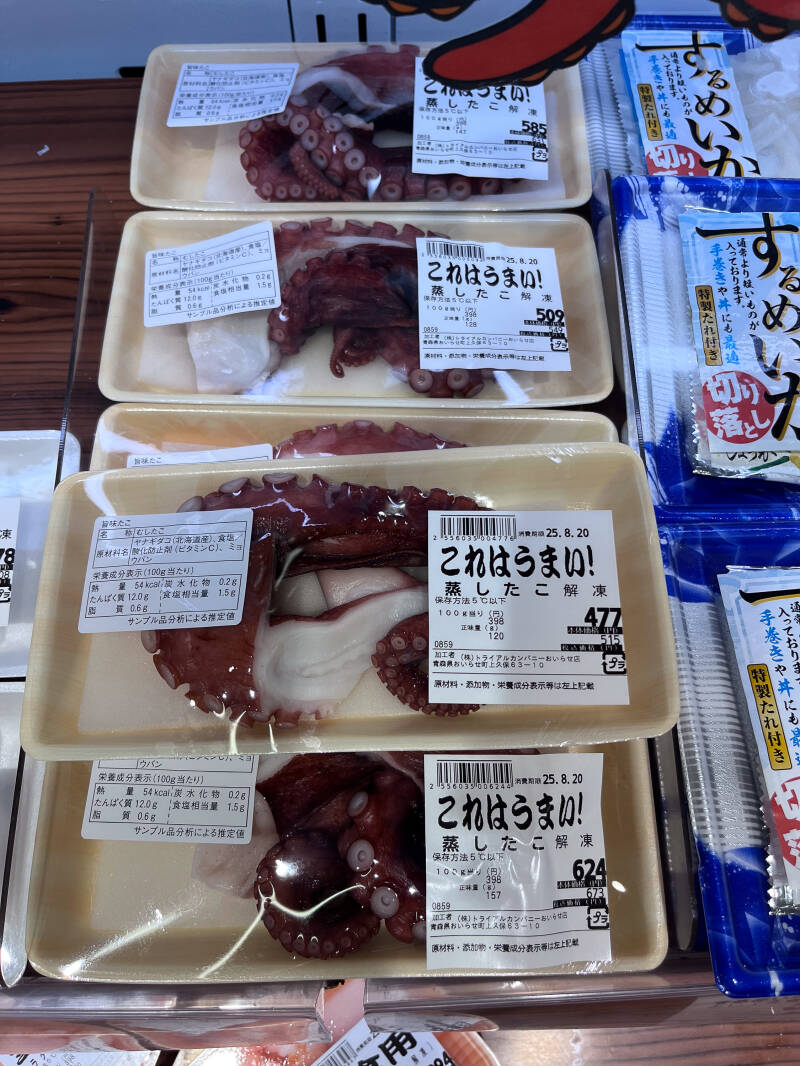
Steamed octopus.

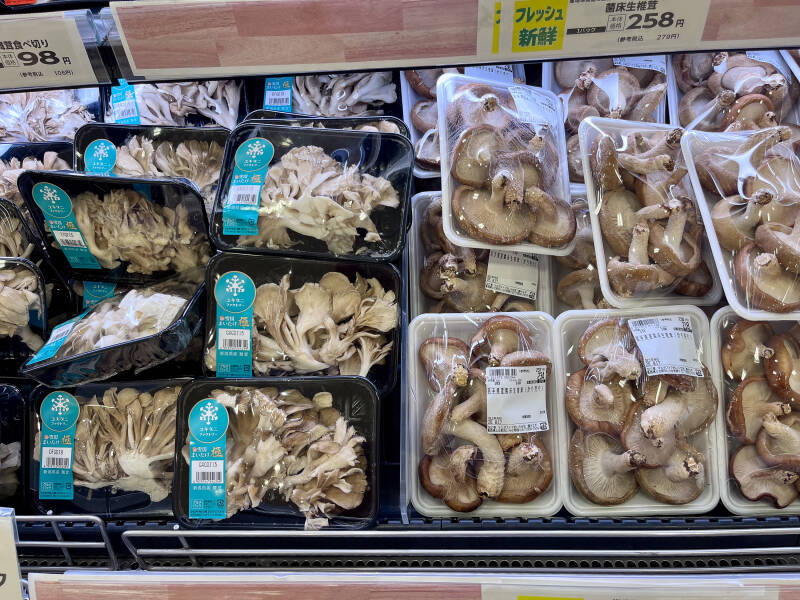
Crazy amounts of mushrooms in all shapes and sizes.
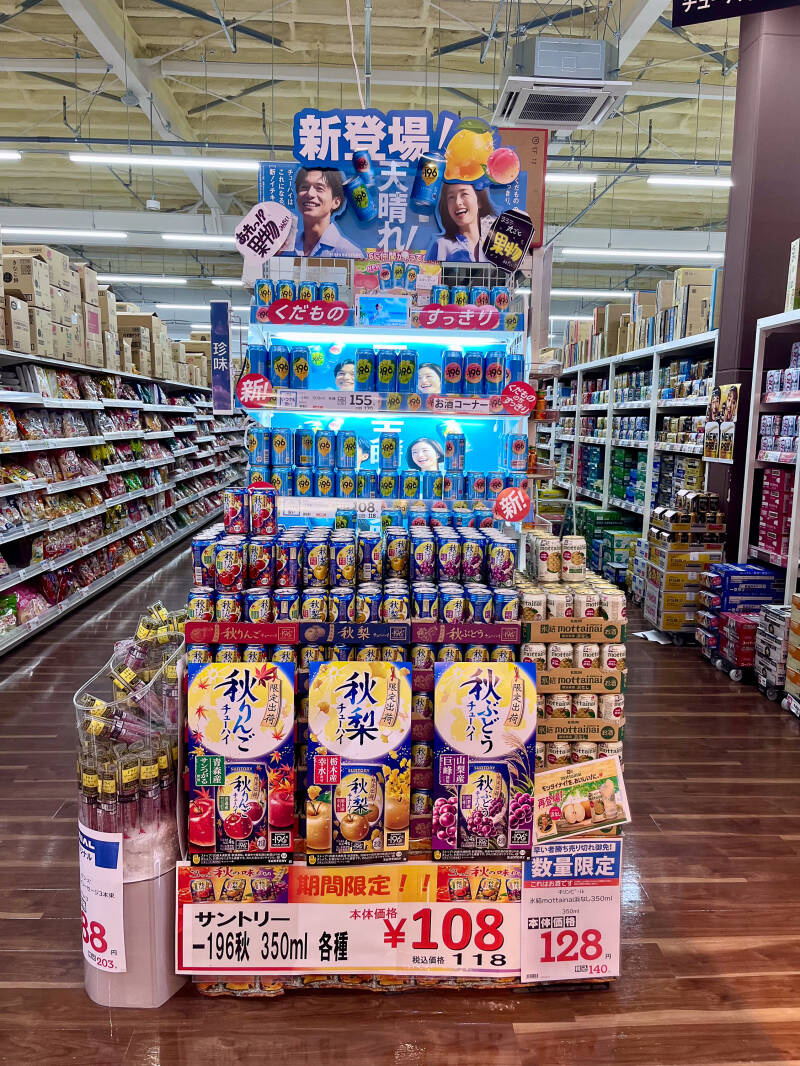
An end cap of fruit drinks...?
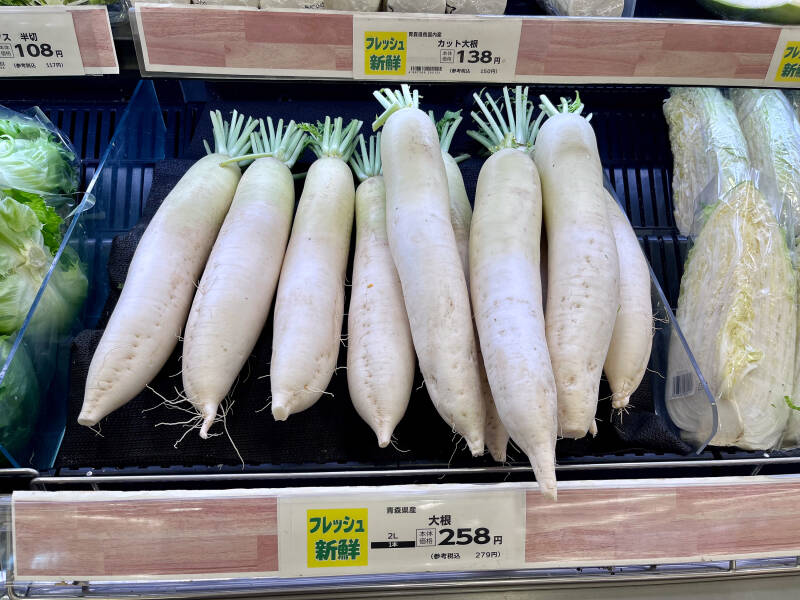
This is daikon, a very large Japanese radish. It was either this or rice that we saw in field after field in the area of Misawa that we stayed.
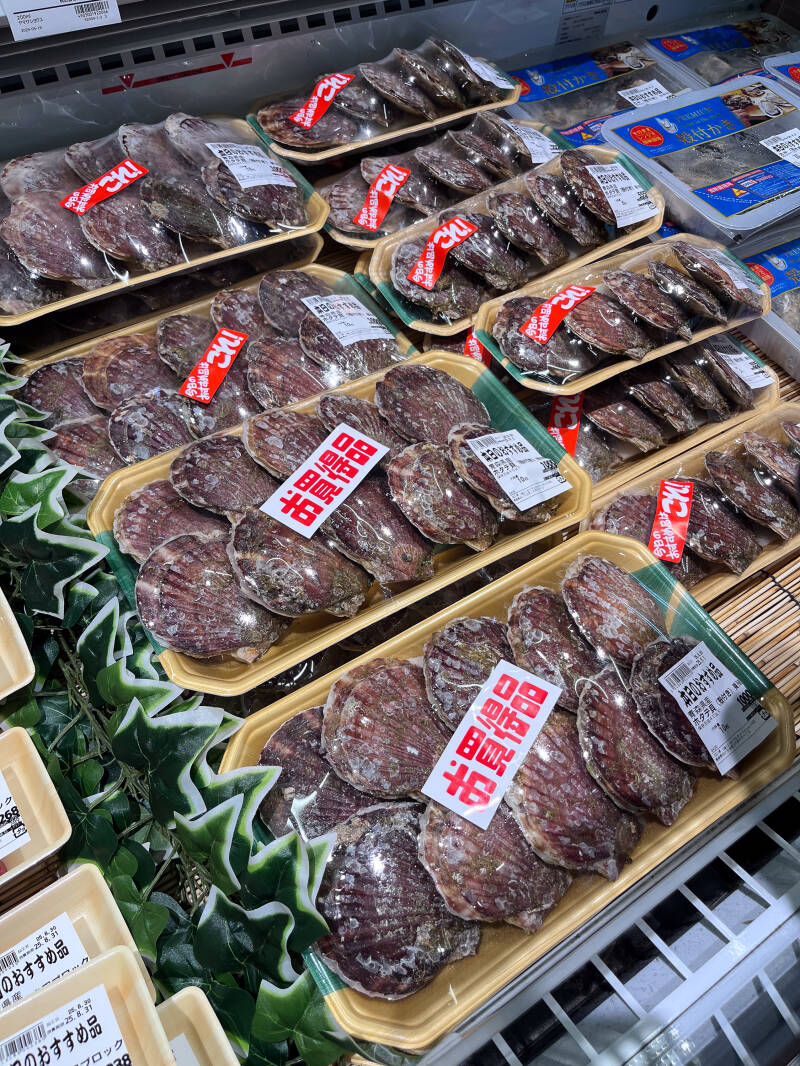
Aaaaaah, the seafood. It was fun to wander around and just LOOK at all of the variety. Above are scallops. We couldn't find a frozen package so had to get that at the commissary.
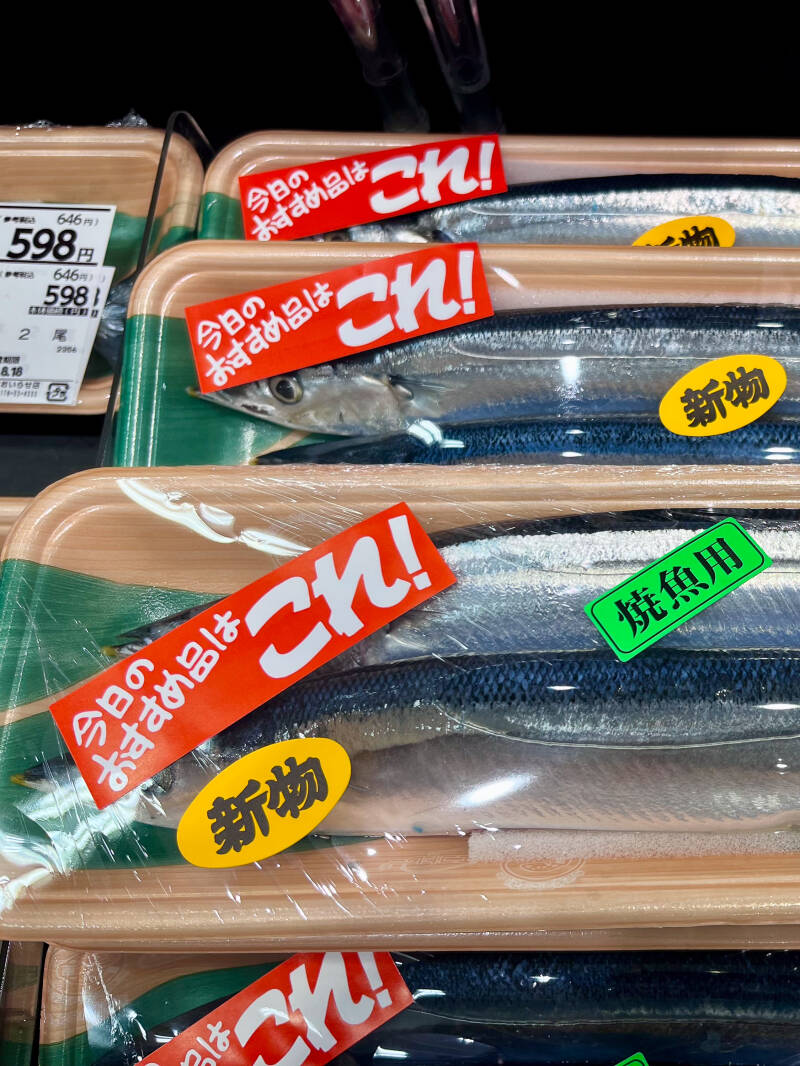
Boiled squid and ...fish!
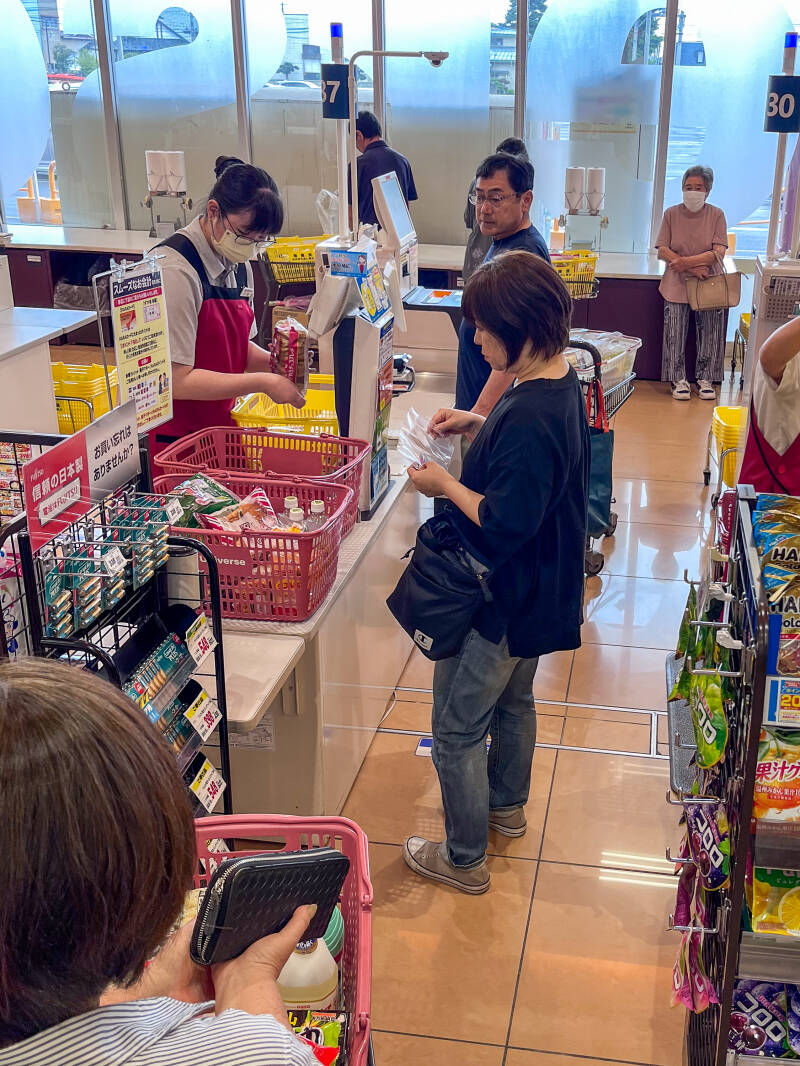
Grocery carts and their baskets...ok, here's the thing. At the commissary on base you could find "American sized" baskets. At the local stores they were this size. It seems that in Japan, people swing by the store on a daily basis and purchase things for that day alone. Part of the reason is that their refrigerators are about the size one would find in an American college dorm room. There are no giant freezers and another chest freezer in the garage.
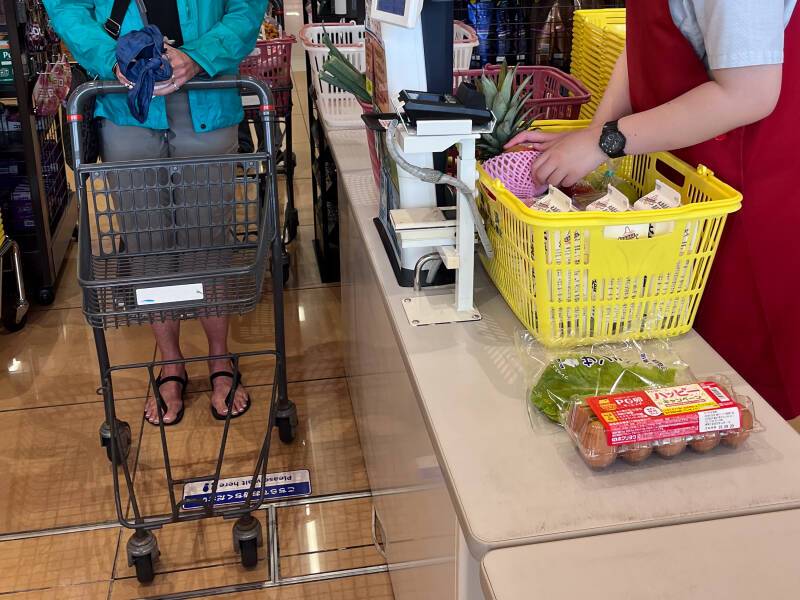
Here's the setup: You set your basket down, the attendant scans your items and puts everything back in the basket. You then slide down and pay at a kiosk before taking your basket to the counter by the window to put your items in a reusable bag that you brought with you.
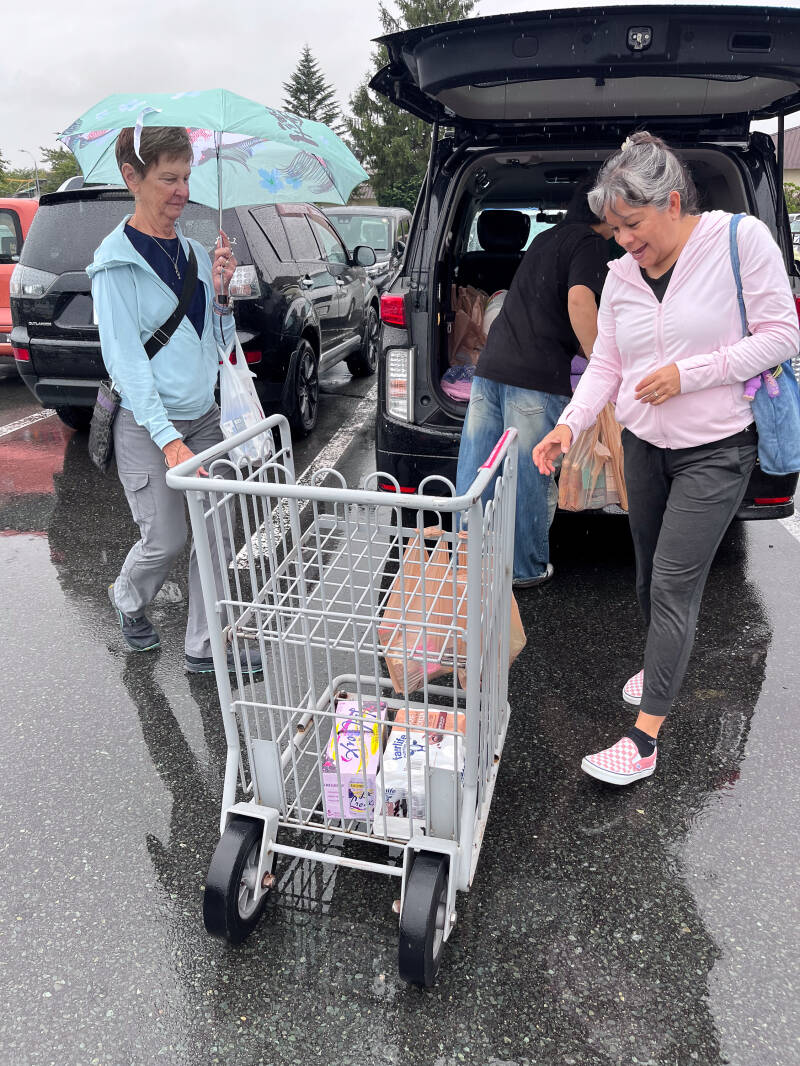
The cart to the right is the "carry out cart" at the commissary, different from the store shopping cart which is "regular" size. The cool thing about this cart is the rounded metal along the sides and back. This is used to hang grocery bags off of to allow for more space in the cart for larger boxed food and drink.
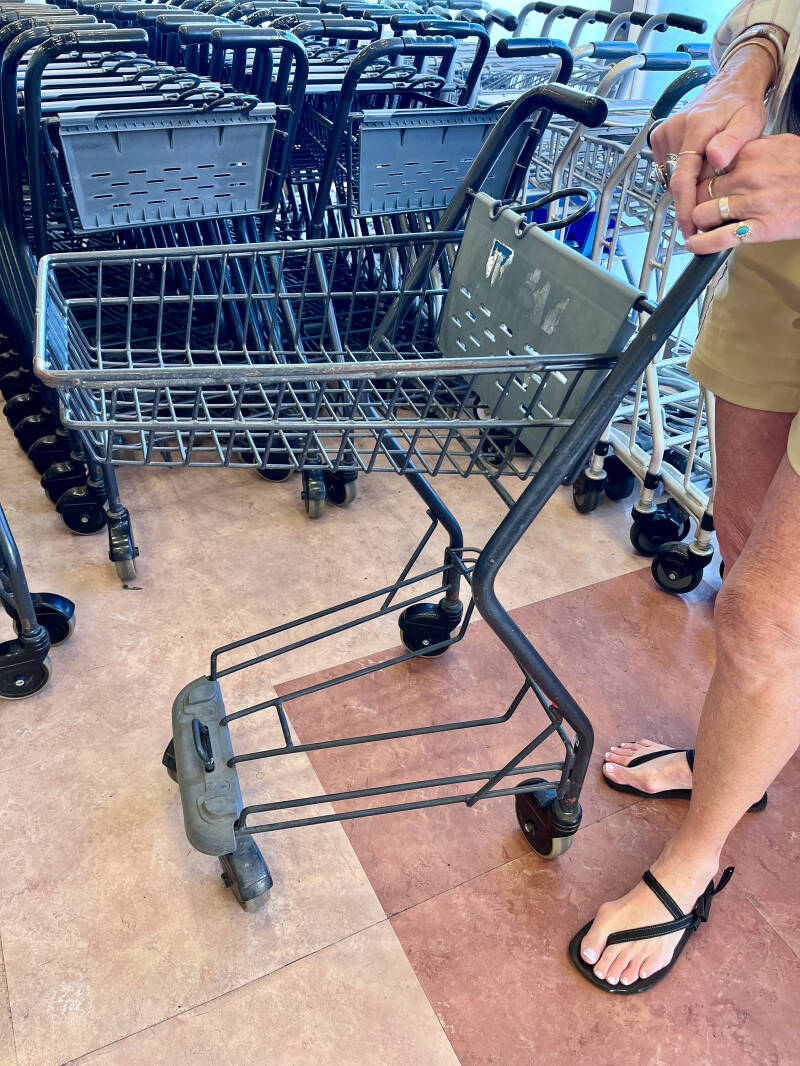
The cart above is designed to carry a hand basket.
Home Food
We cooked at home most nights and ate out as a family a few times. The Nelson's loved showing off their favorite restaurants.
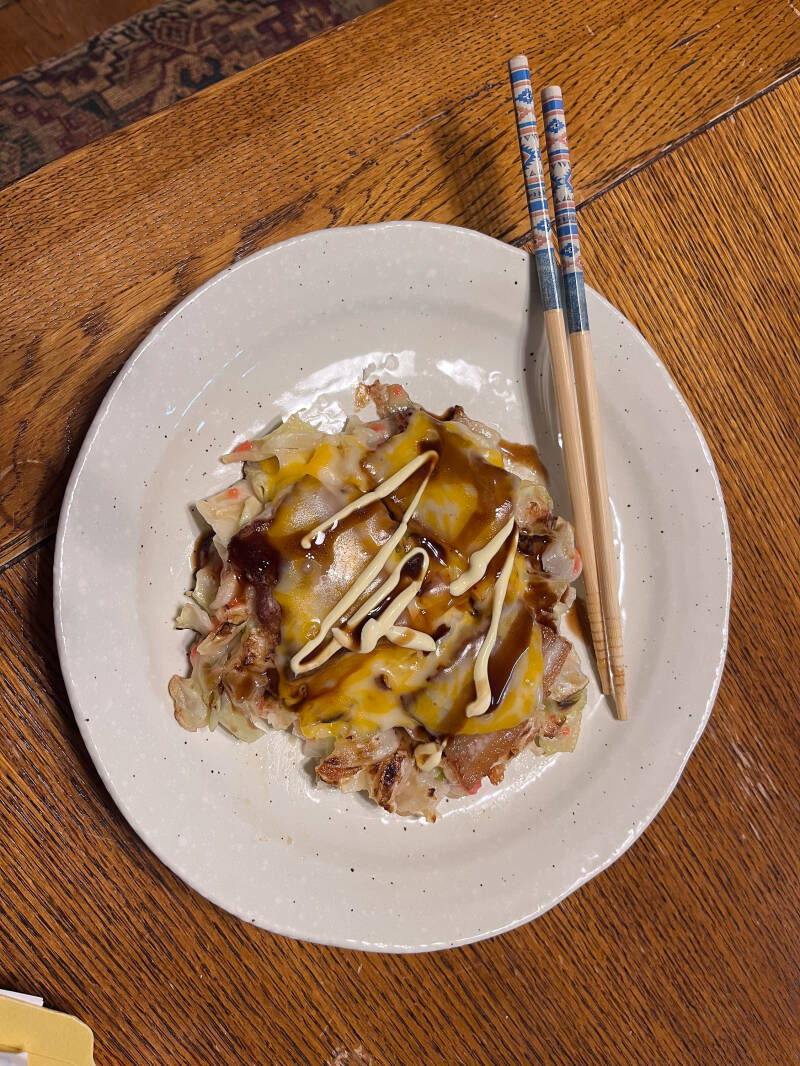
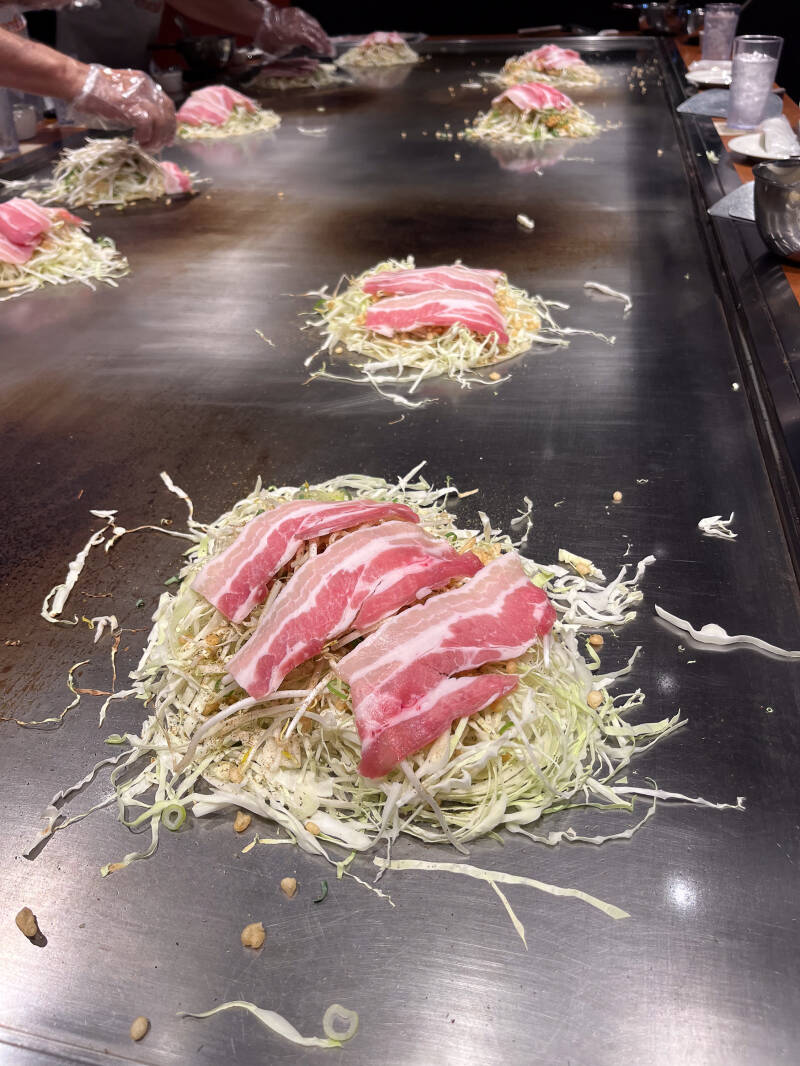
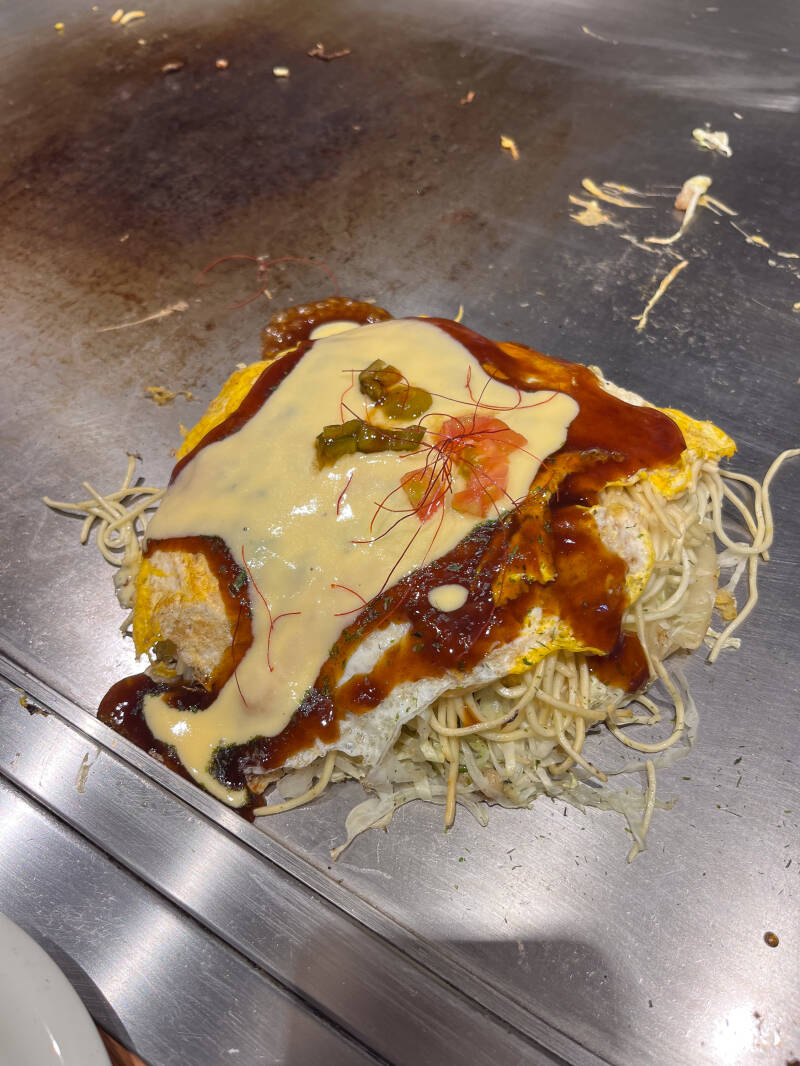
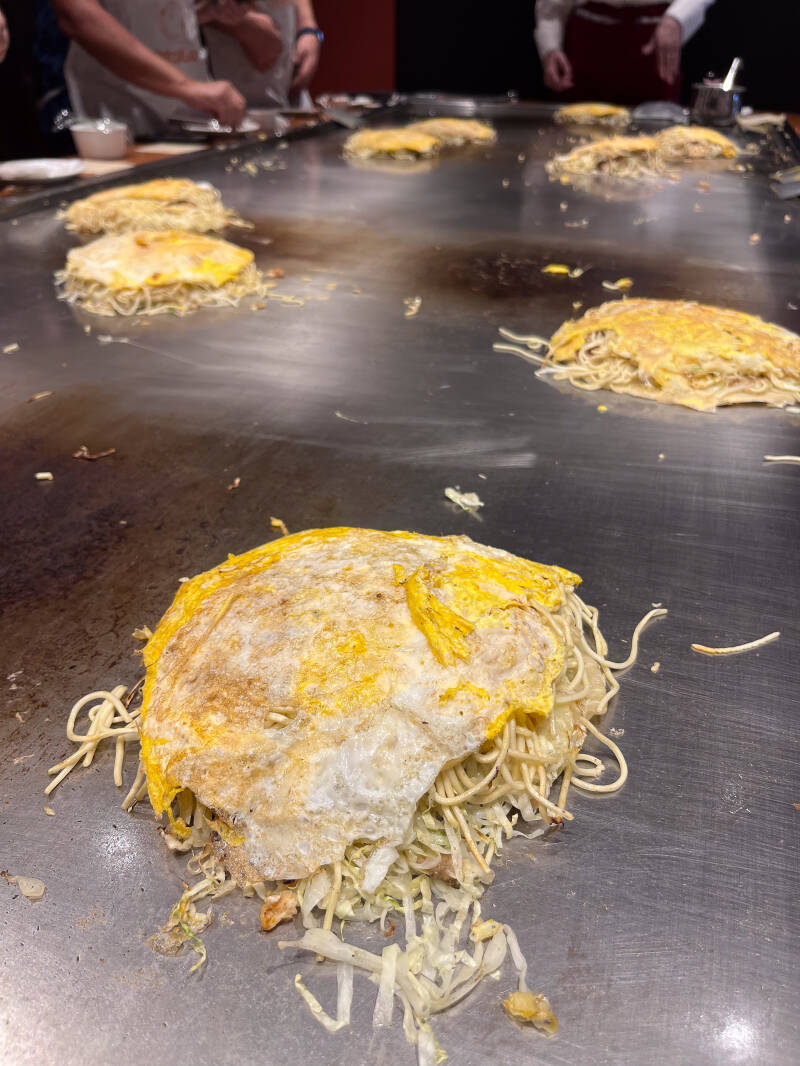
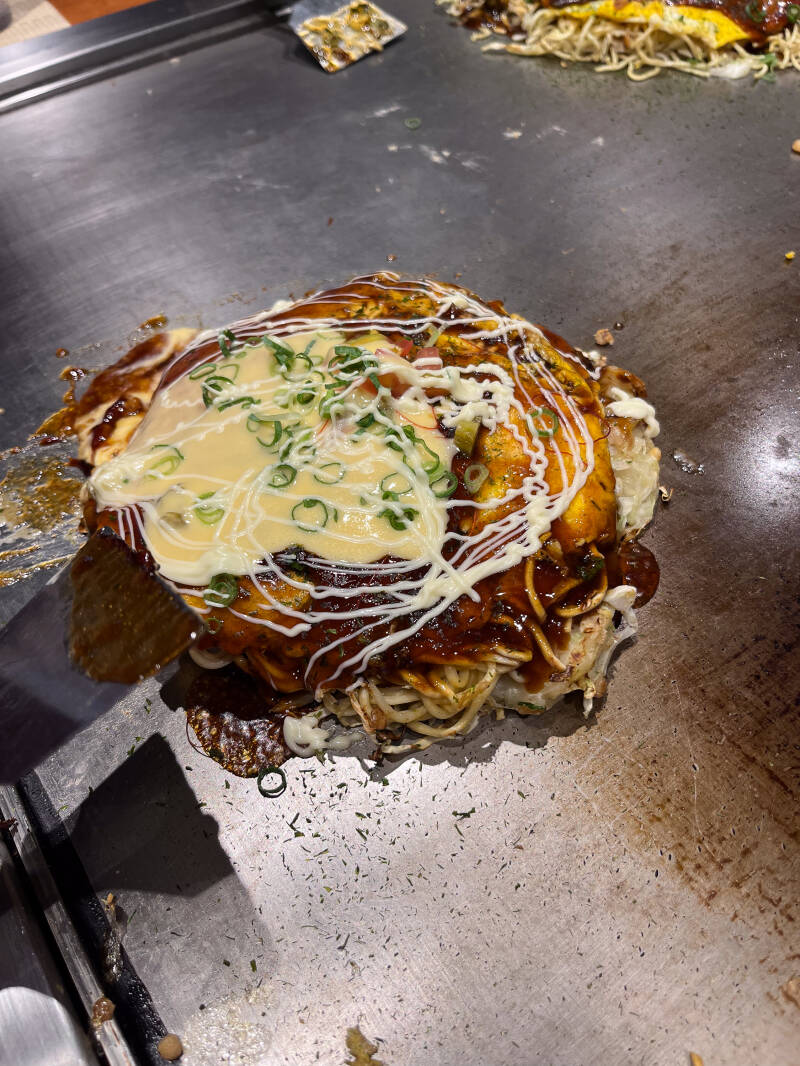
Kamalene made Okonomiyaki a Japanese savory pancake dish consisting of wheat flour batter and other ingredients cooked on a flat griddle. Common additions include cabbage, meat, and seafood, and toppings include okonomiyaki sauce (made with Worcestershire sauce), aonori (dried seaweed flakes), Japanese mayonnaise, and pickled ginger.
The name is derived from the word okonomi, meaning "how you like" or "what you like", and yaki, meaning "grilled".
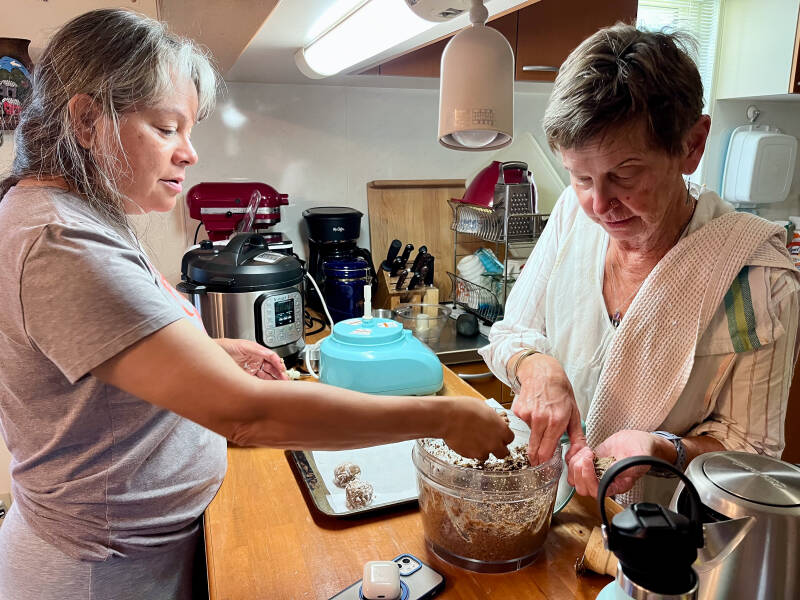
Ellen is teaching Kamalene how to make Nut Bombs, a keto friendly snack item.
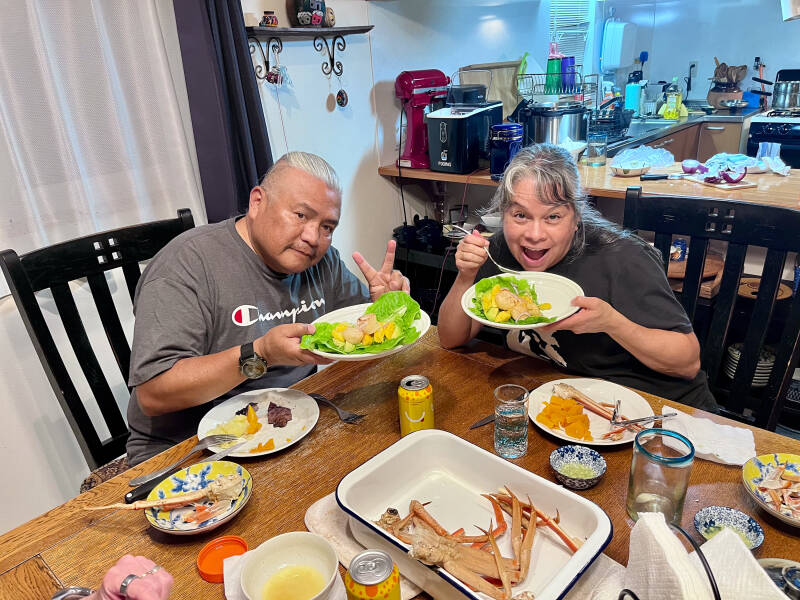
On this night we made scallop salad and crab legs. To be clear not all nights were this fancy. Most nights were Mike on the grill, rice and a salad.
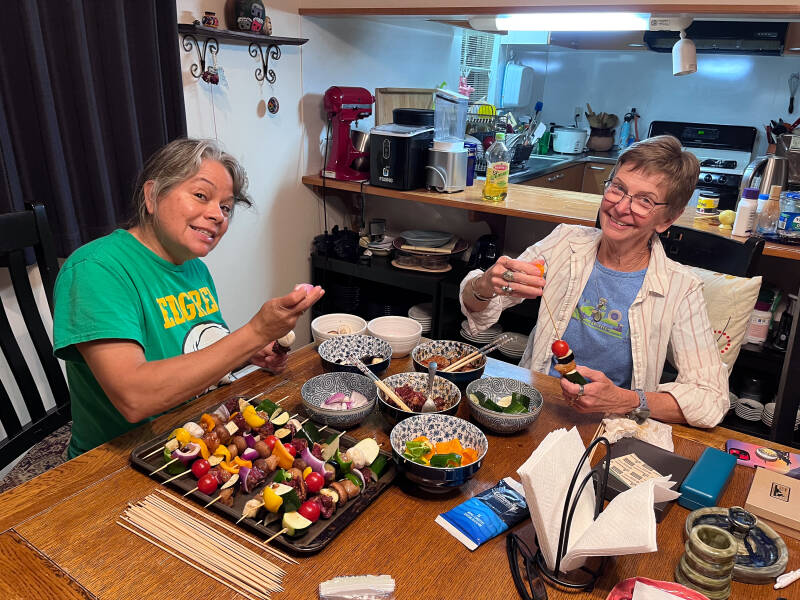
We made shish-ka-bobs!
Other home meals included:
stir-fry; pizza; chicken enchilada casserole; pork ribs & potato salad; chicken strips & salad; chicken pitas; burgers and salad; BBQ chicken, rice & asparagus; burger stir-fry; shrimp, scallop, steak kabobs; chili & cornbread; and jerk chicken, rice & coleslaw.
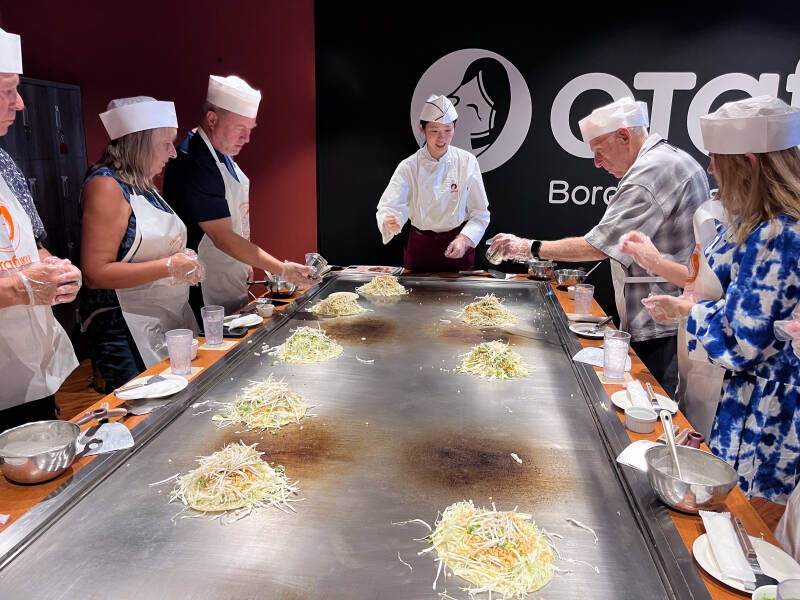
One of our activities on our tour was going to a cooking school and making our very own Okonomiyaki! It was SO delicious!
Hotel Buffets
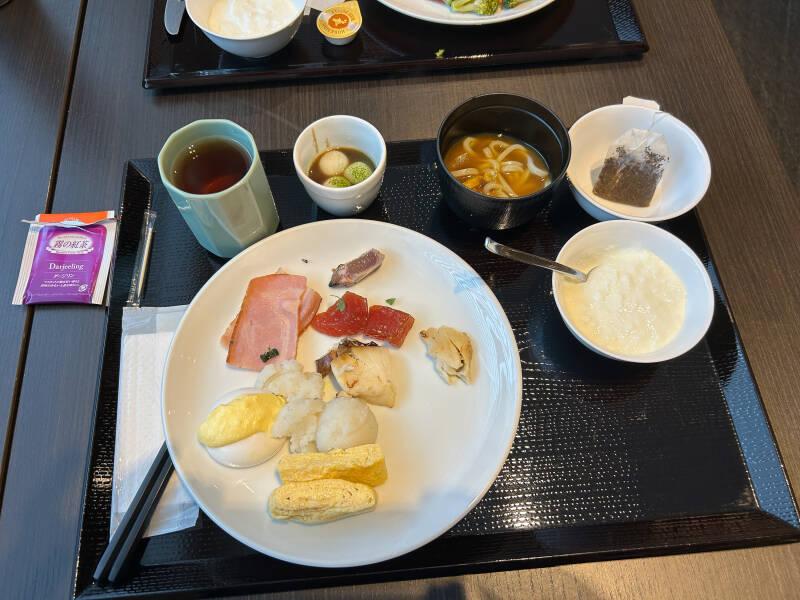
On our tour after leaving the Nelson's in the north we stayed in hotels every night and were treated to delicious buffets every morning.
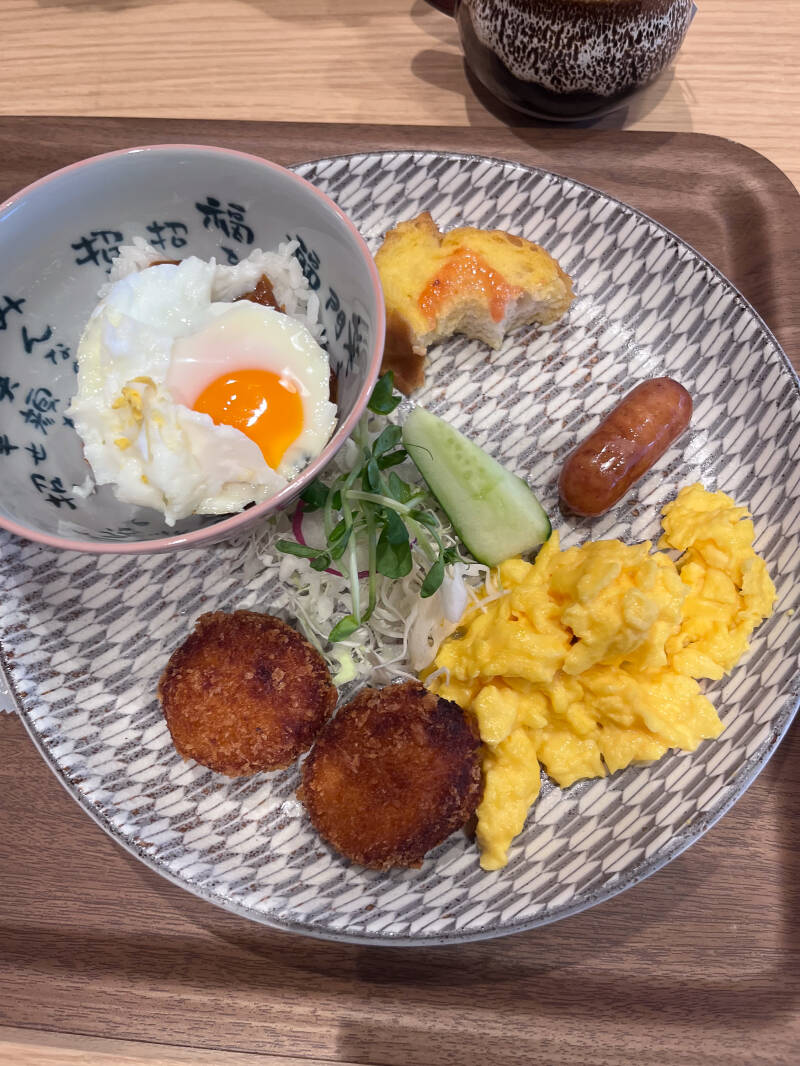
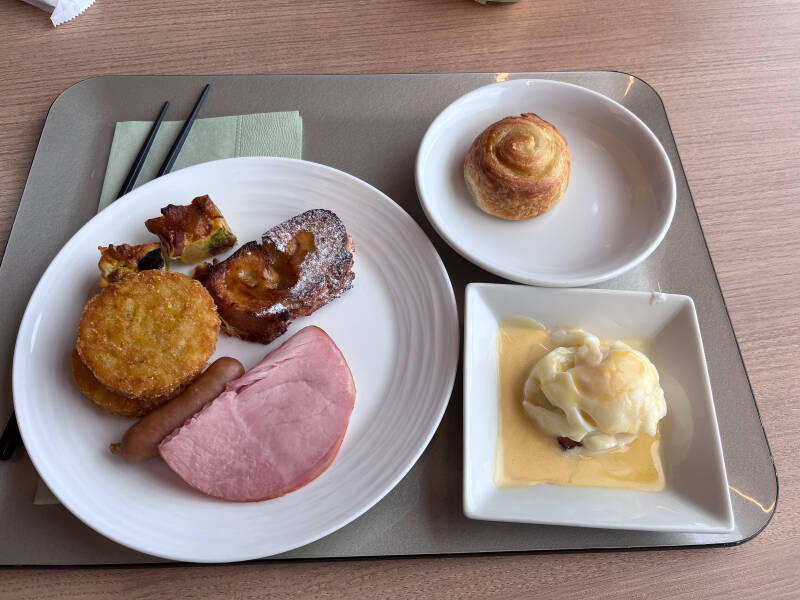
We were able to get a mostly western style breakfast if we wanted to. Here is a poached egg on rice, two potato rounds, egg, a sausage, toast with jelly and a touch of salad.
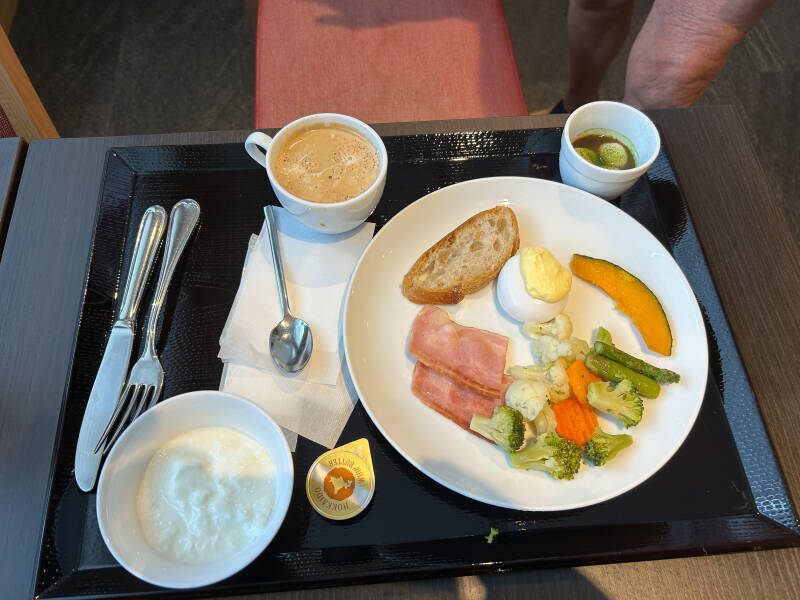
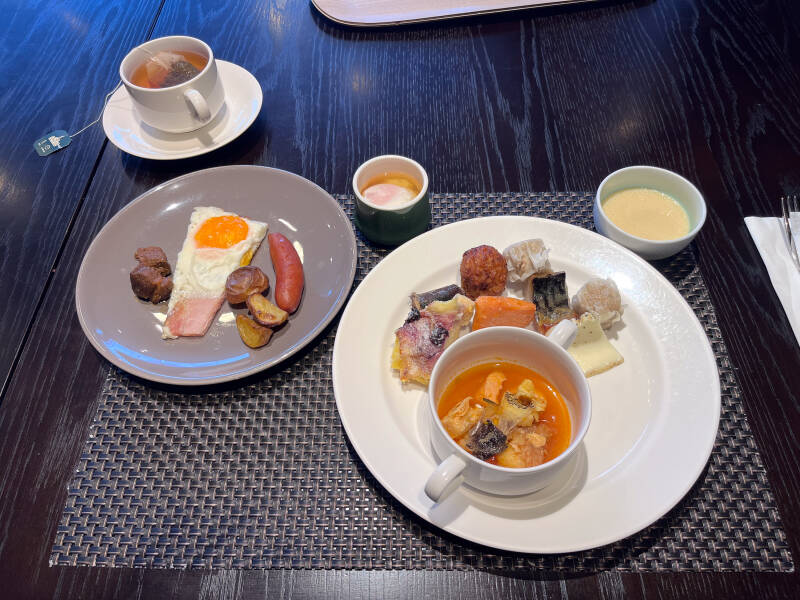
More examples of a mostly western breakfast with a little local fare mixed in.
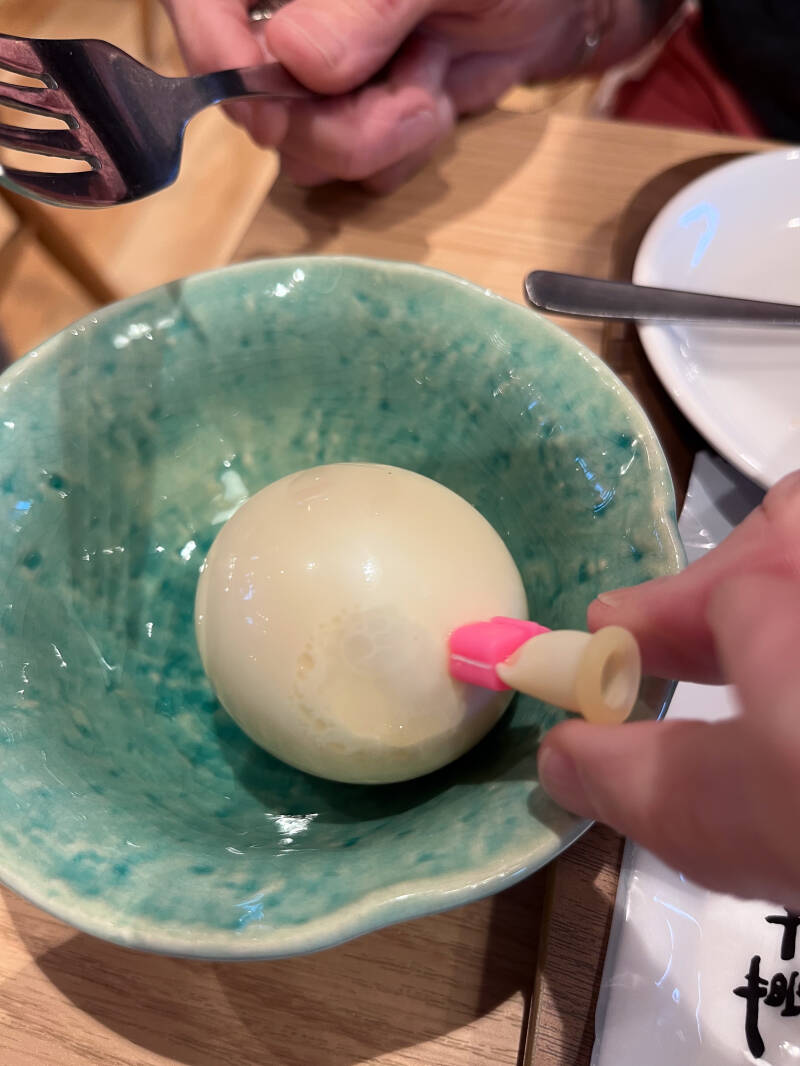
A yogurt ball? This was a fun activity one morning. Several of our new friends and Ellen spent some time trying to figure out how to get into it.
Nishiki Market
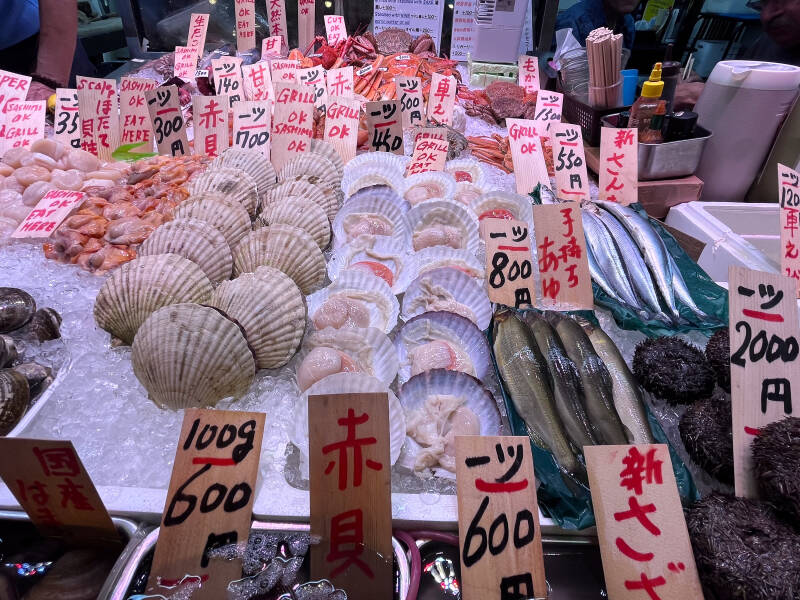
As early as the year 782 the sale of fish started in the area of what is now Nishiki Market, thanks to the cold groundwater available at the site, which made possible to keep fish and other meats fresh in a location close to the Kyoto Imperial Palace. The market continues to be located on Nishikikōji Street, running for approximately 400m between Takakura Street and Teramachi Street, as a narrow shopping arcade paved with cobblestone. The market is often called “Kyoto’s kitchen” for its abundance of shops (about 130) offering fruits, vegetables, fish, dry foods and more.Many vendors at Nishiki Market practice sustainable methods by reducing plastic use and incorporating biodegradable packaging, aligning with Kyoto's broader efforts toward environmental preservation.
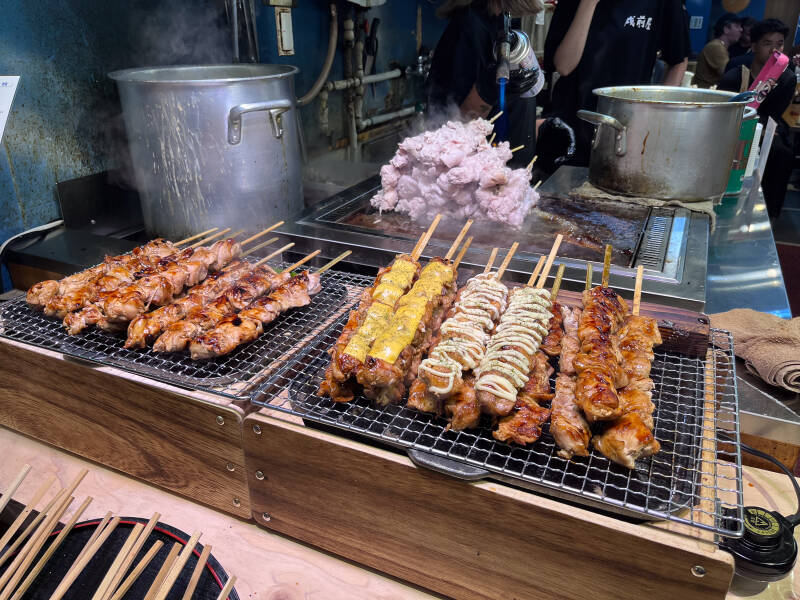
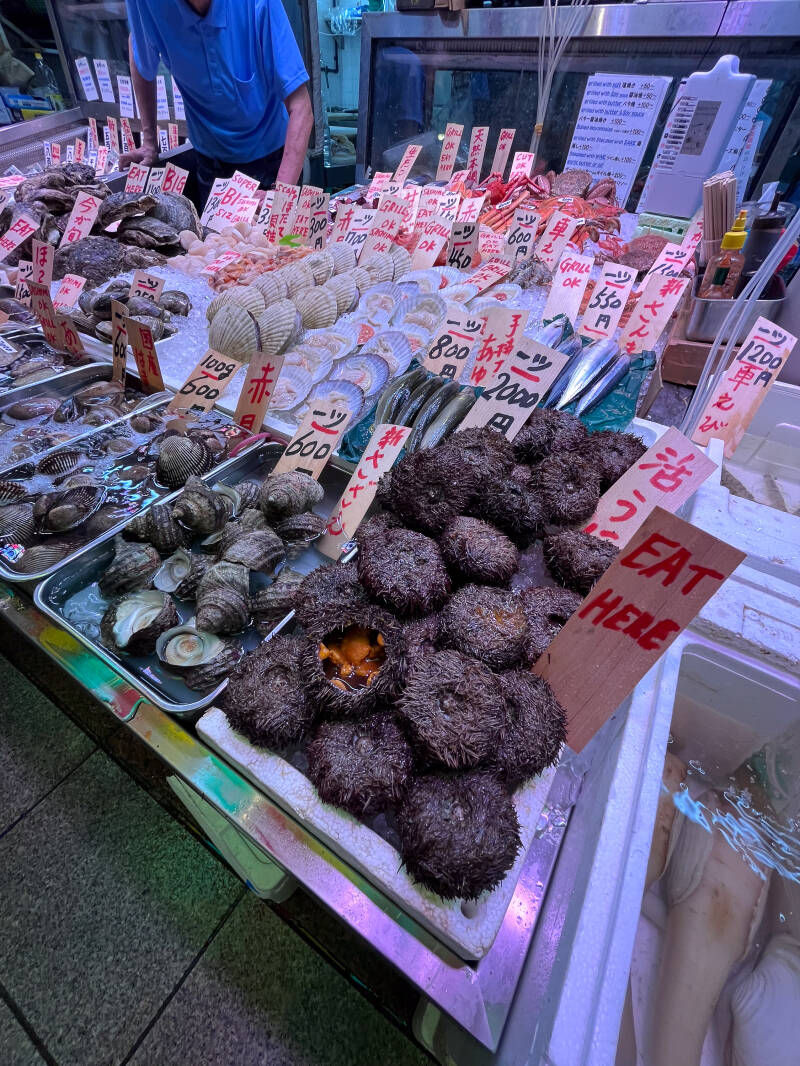
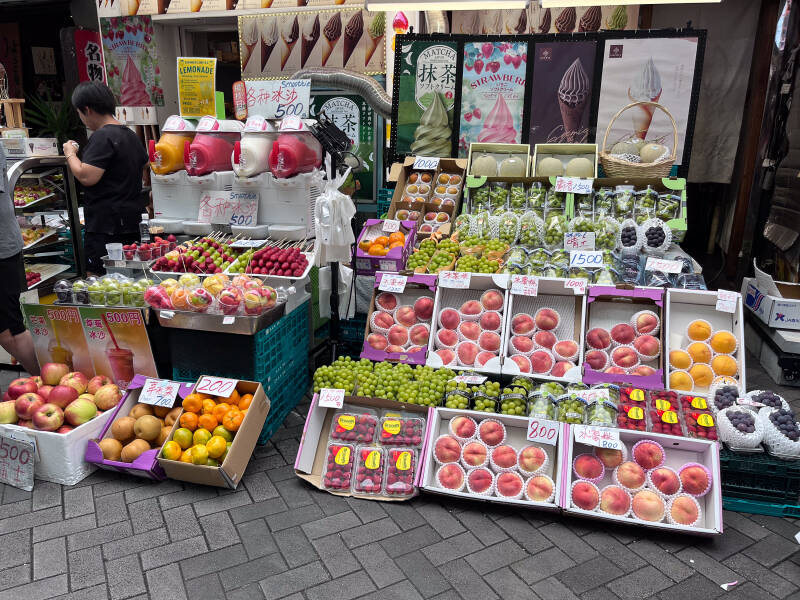
Some of the food items you see below are plastic replicas but honestly? It was hard to tell. Most of the stands were food with an occasional stand of goods.

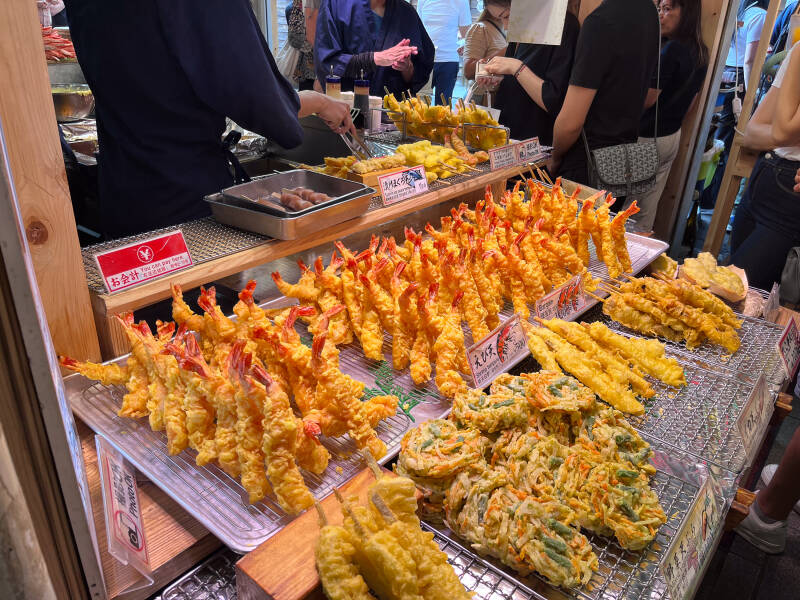
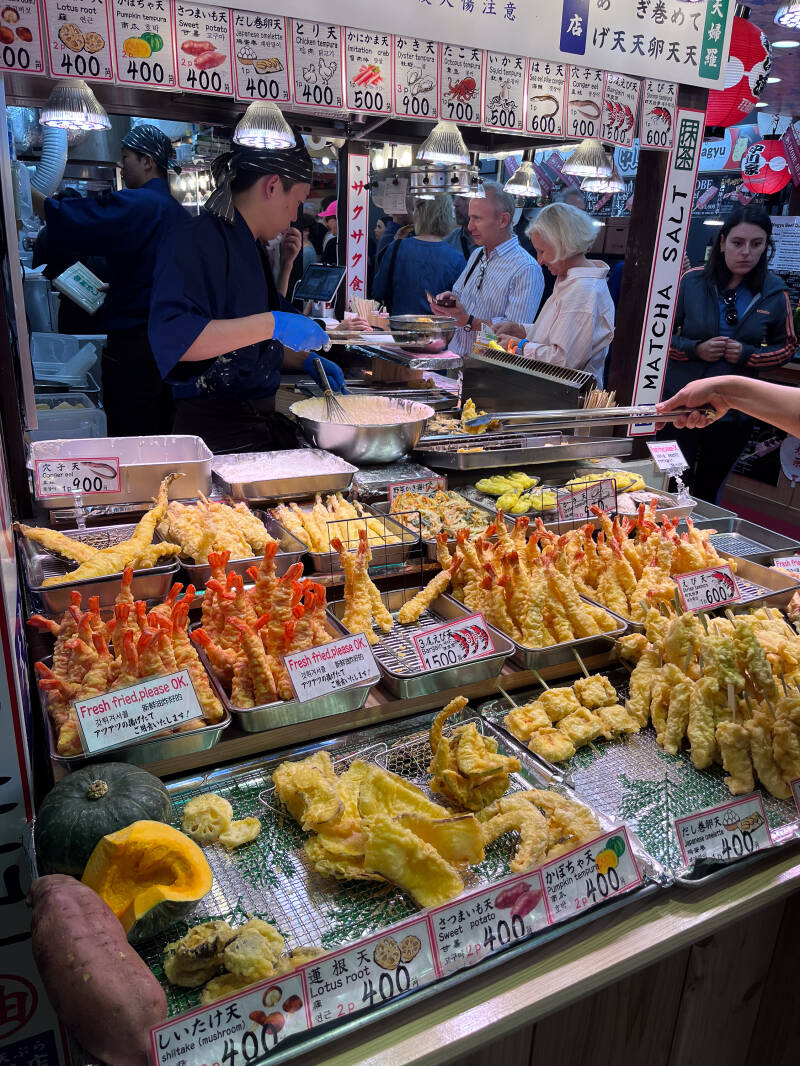

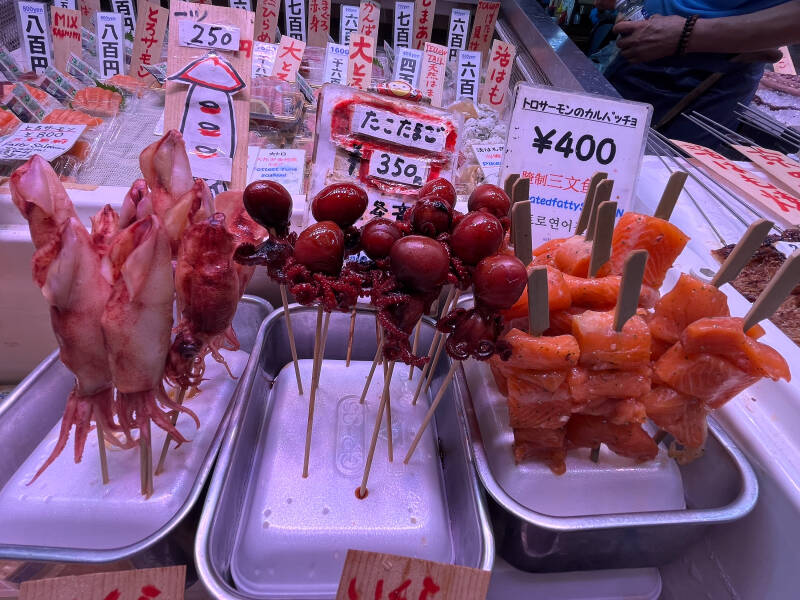
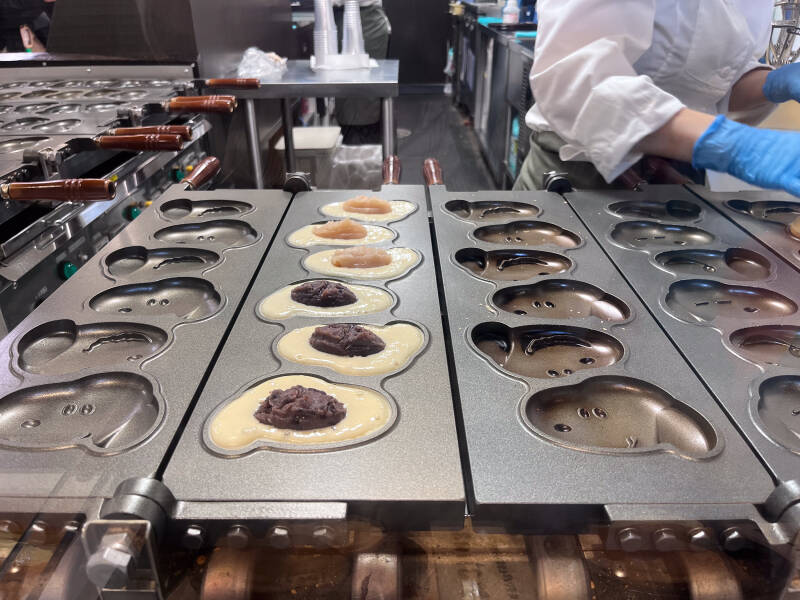
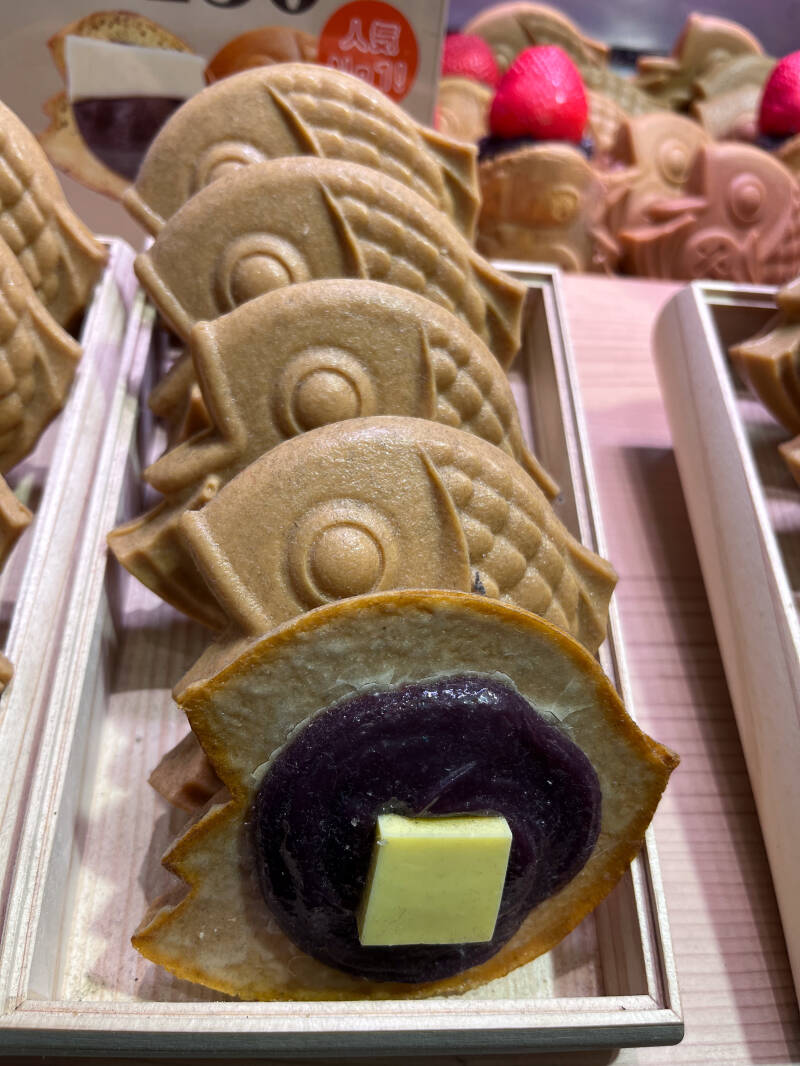
These were DELECIOUS! We had the traditional black bean and butter on the inside. The model to the right is plastic.




Restaurant Food
In no particular order...here is what we ate in restaurants.
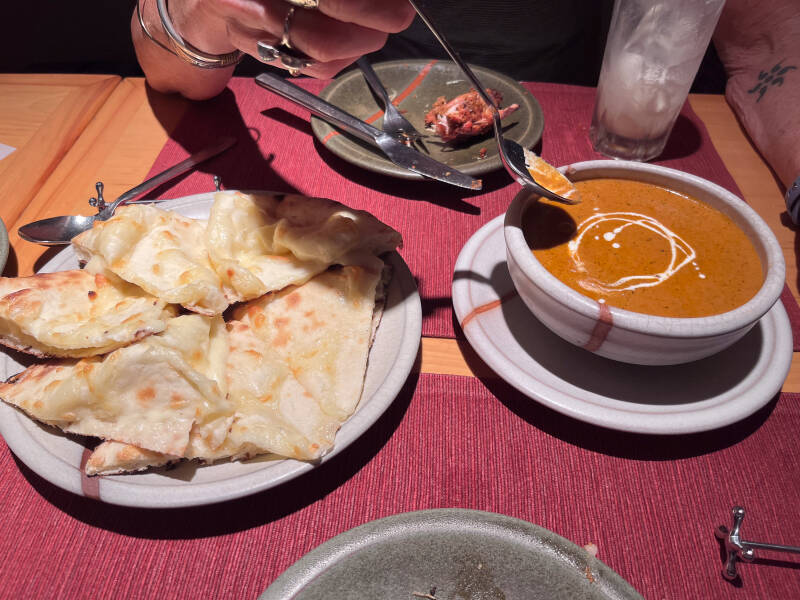
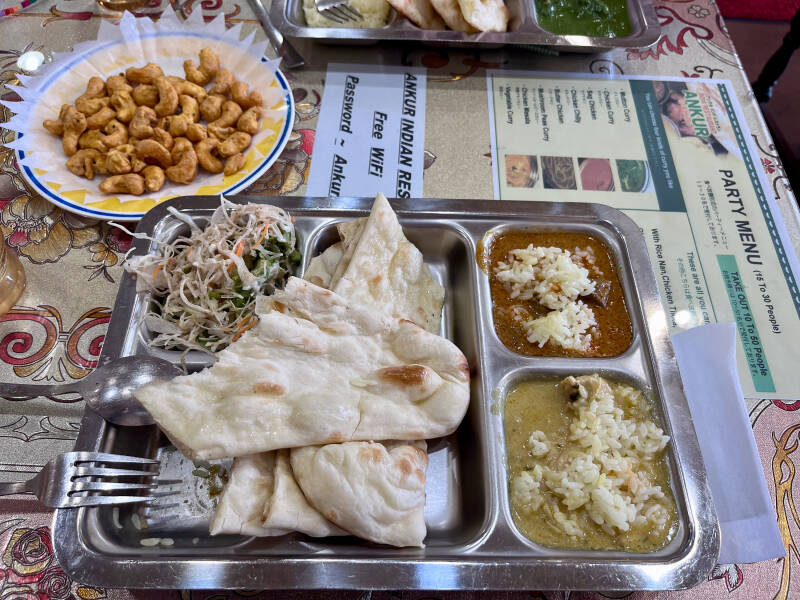
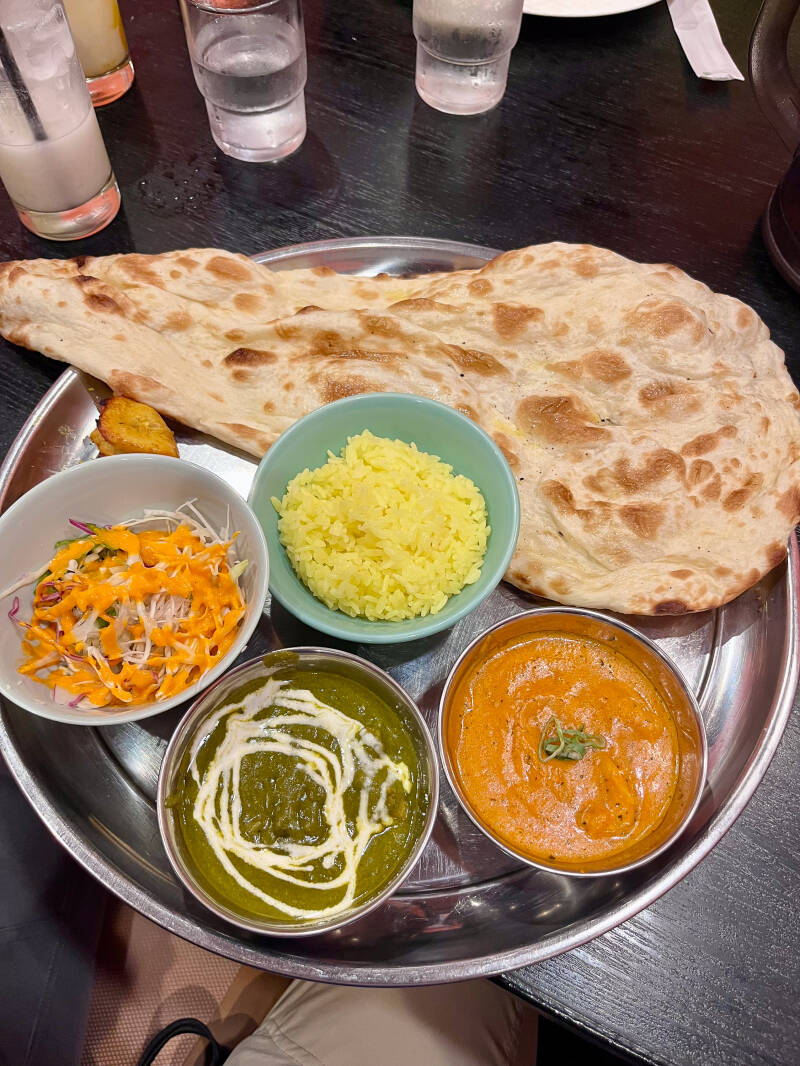
Indian cuisine became our go-to meal when we needed a break from Japanese food, as delicious as it was. And the naan? the best we've ever had. Not sure what they do differently but...YUM!
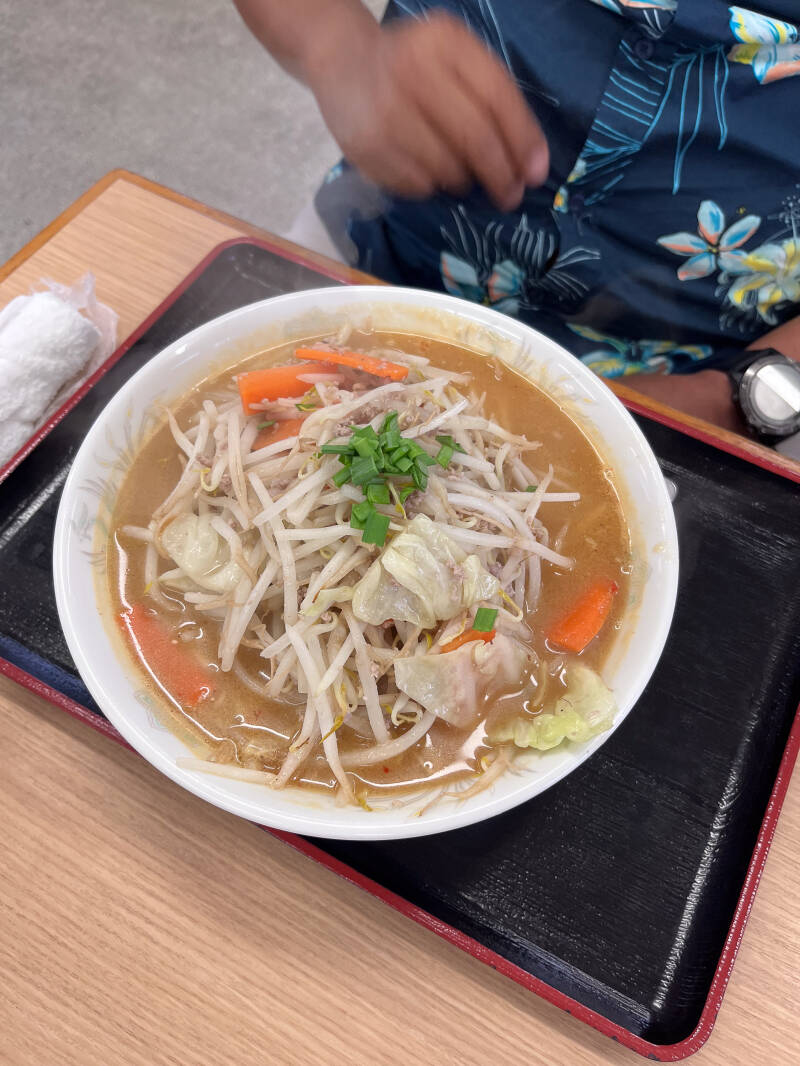

Here are two of the meals ordered one night at Toki Ramen, one of the Nelson's favorite restaurants.
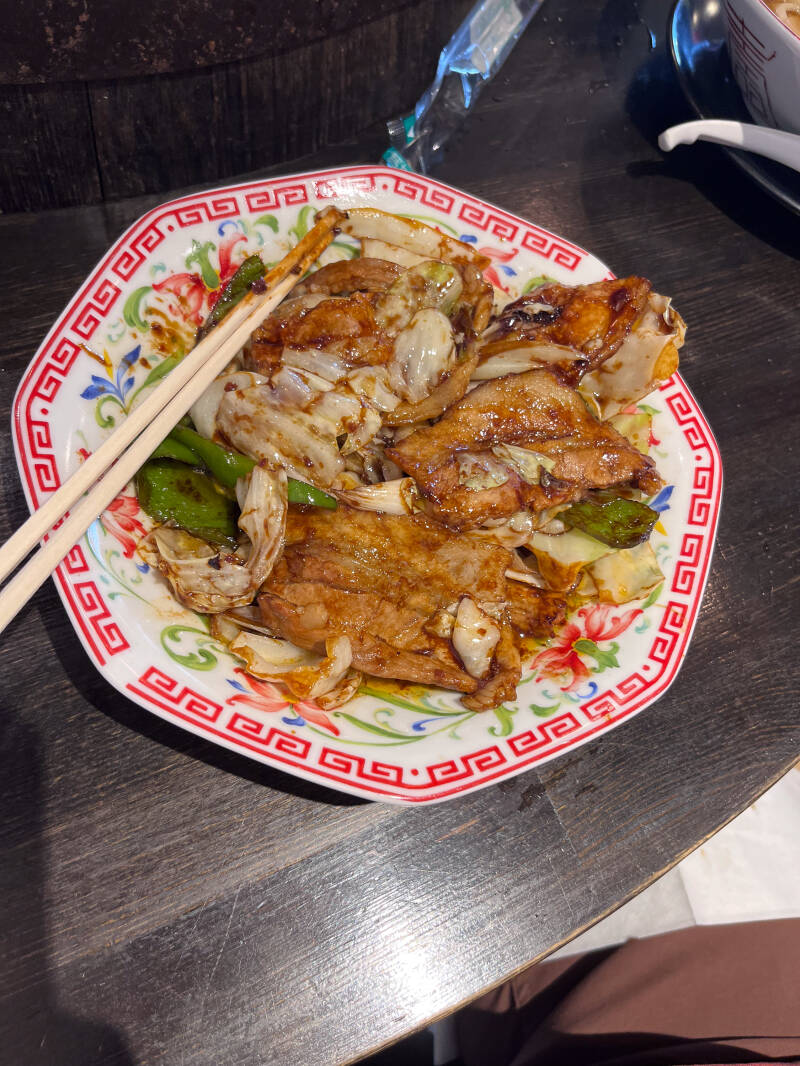

Our two meals from a Chinese restaurant in Aomori City on one of our overnight excursions. Mine was a delicious chicken dish and Ellen ordered a battered shrimp ramen dish.

Yes, those are hamburger patties at Hama Sushi, the Nelson's favorite sushi restaurant where your food arrives on a conveyor belt.
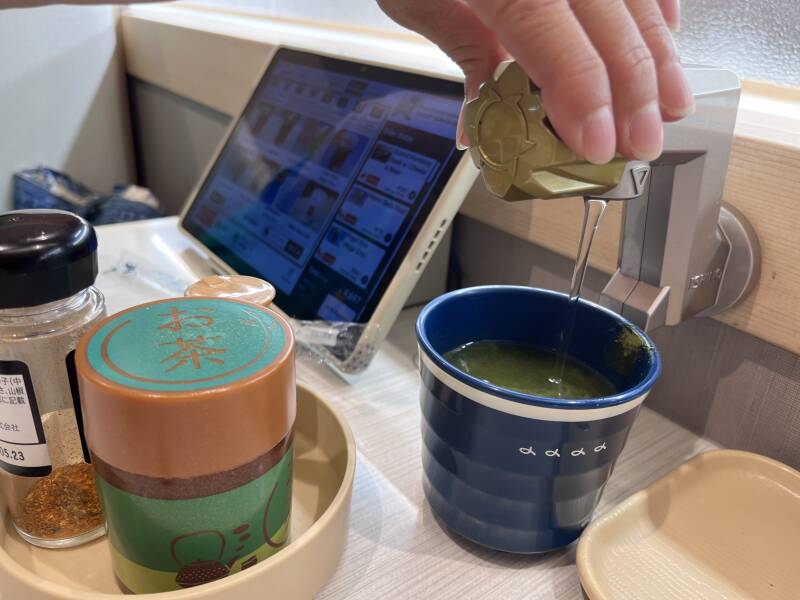
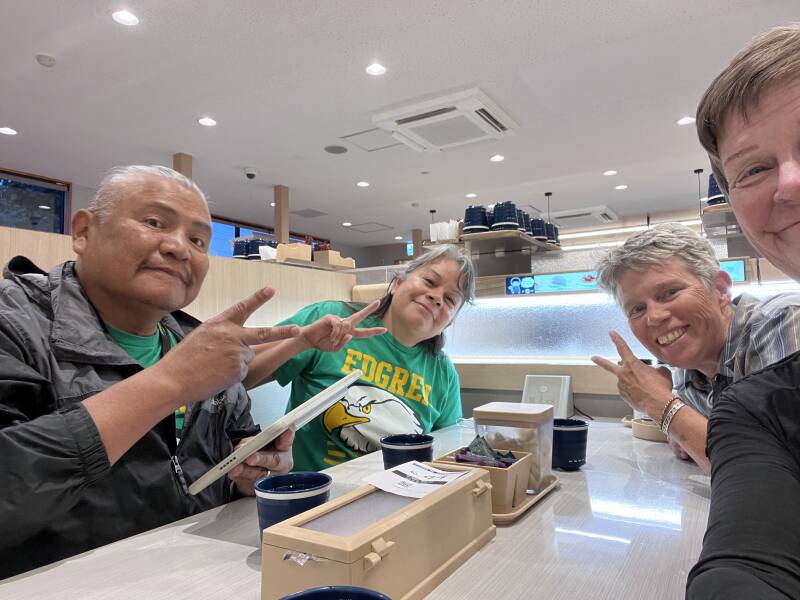
There is a hot water spout at the table in order to have Macha Tea.
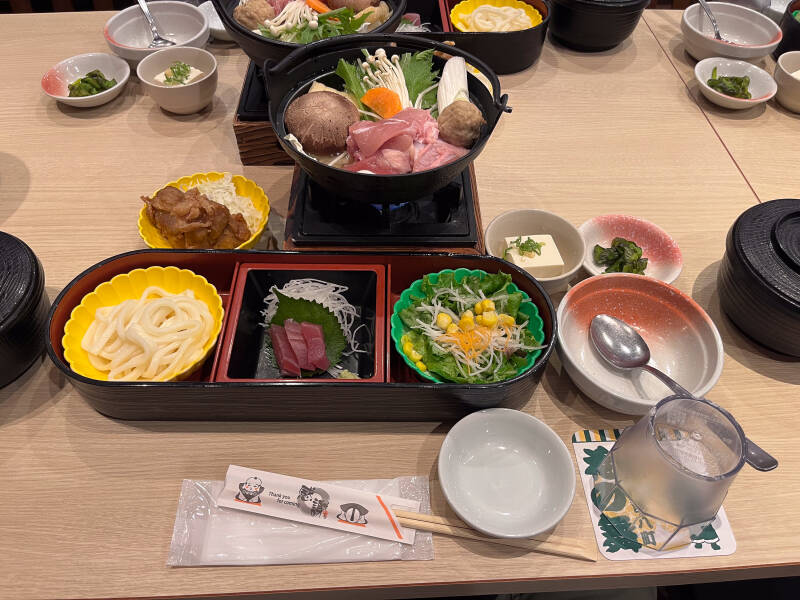
This was lunch at a Sumo themed restaurant in Tokyo on the second day of our bus tour. The pot above the tray of three items was hot and cooking the ingredients you see.
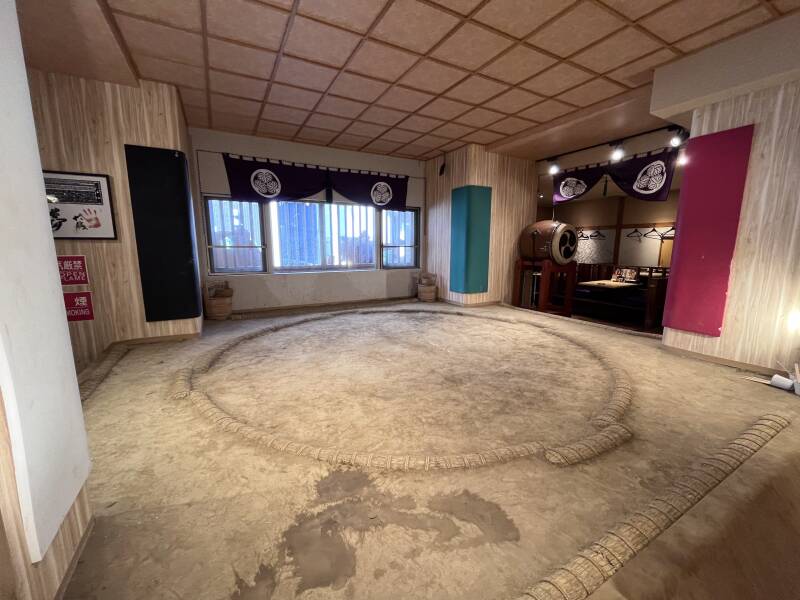
The restaurant even had a sumo wrestling ring!
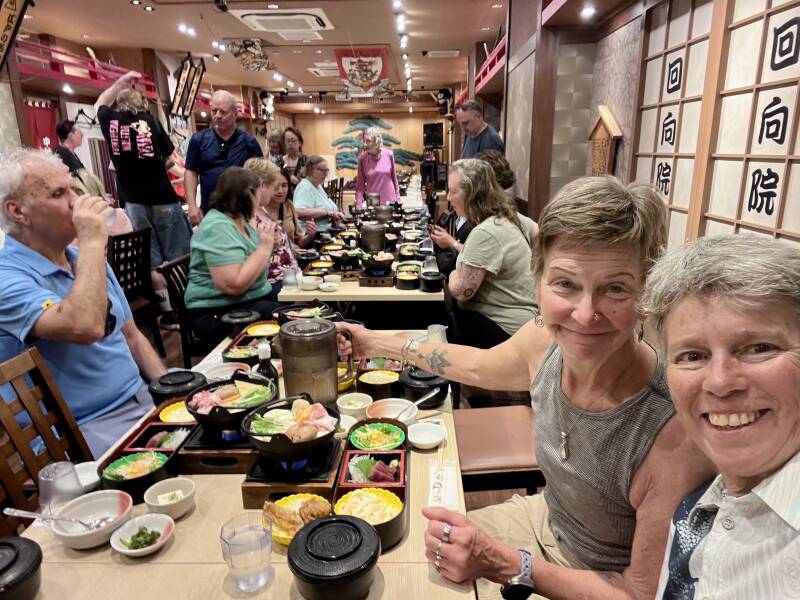
Our new friends sat in front of us and to our left. The folks you see at the far table are another tour.
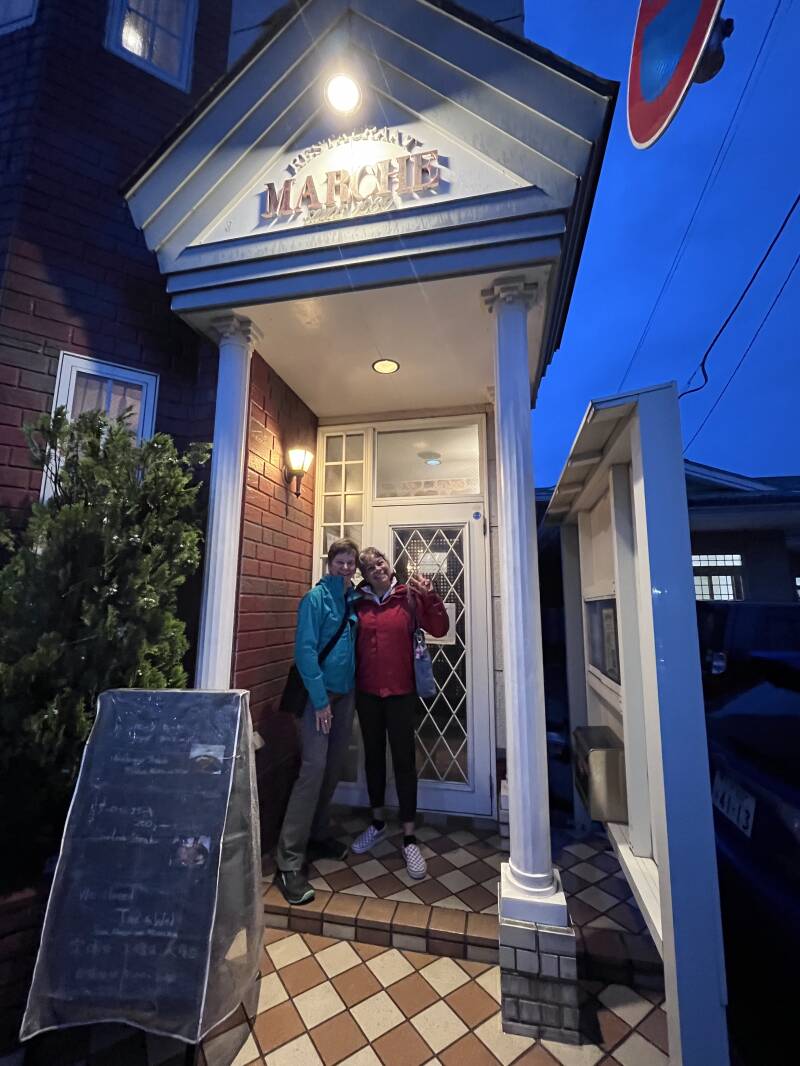

One of our last nights in Misawa found us at Marche having buttered salmon. Another favorite Nelson Family restaurant.
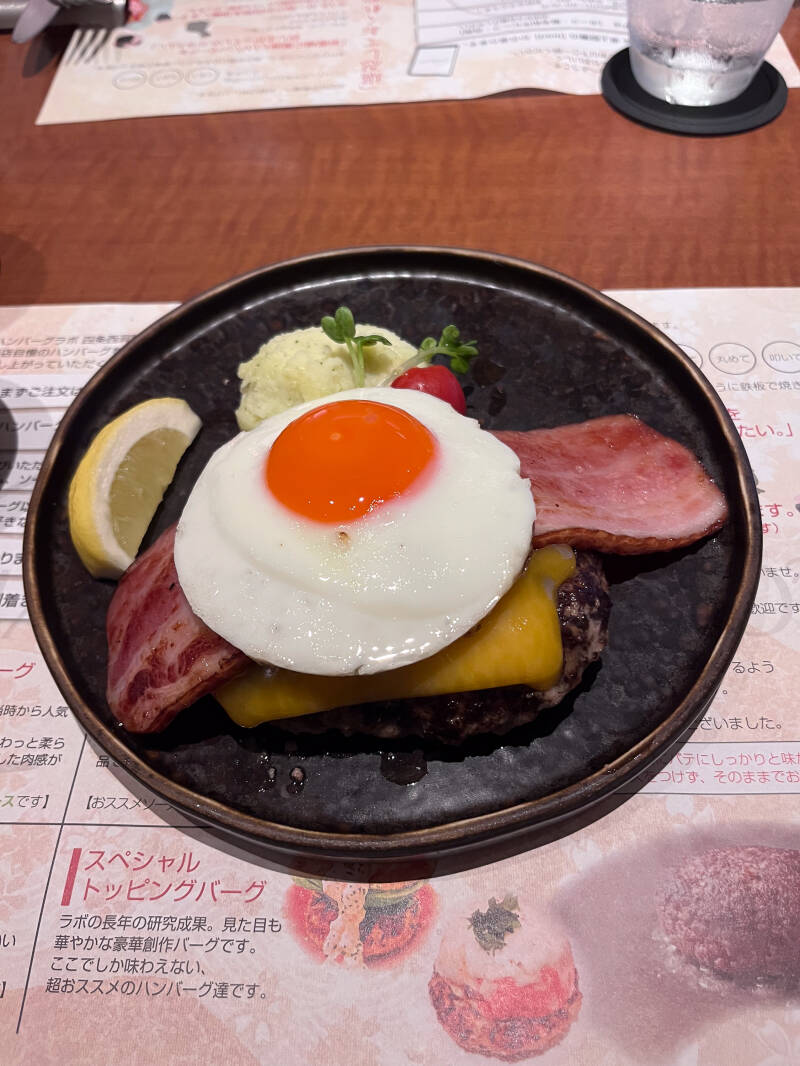
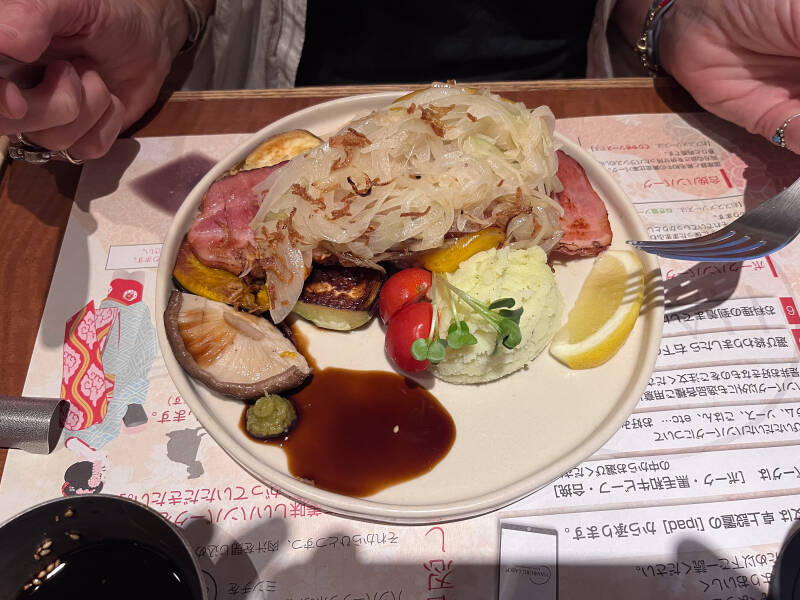
We walked to a nearby burger restaurant for my birthday in Kyoto and had gourmet burgers, Japanese style. Mine was a patty, cheese, bacon and an egg. Ellen had a patty, cheese, ham and sauerkraut.
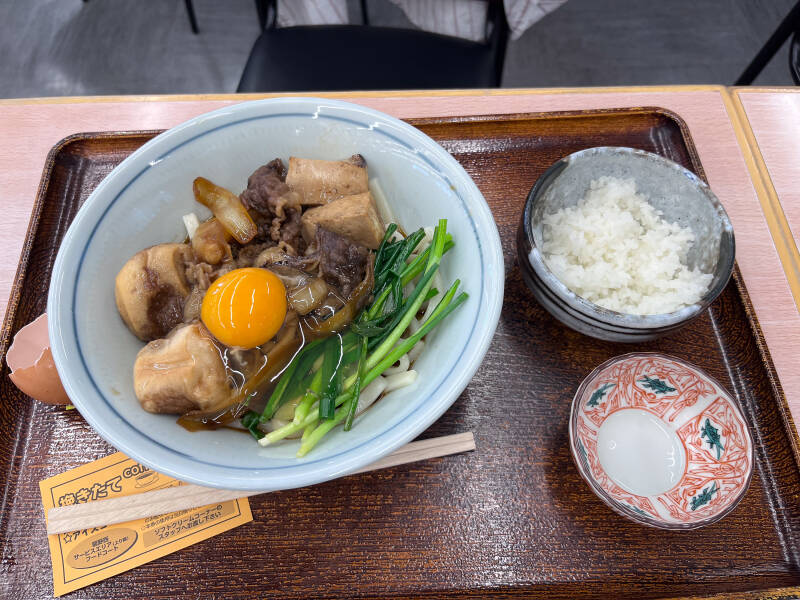
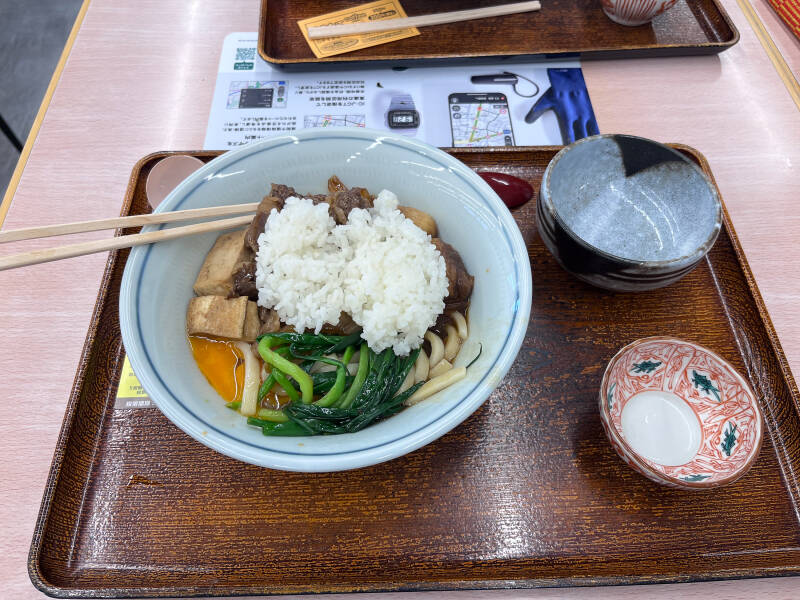
My birthday, Tuesday September 23rd, was spent on the bus getting from Hiroshima to Kyoto. On the way we stopped at a service area. Think rest area on steroids. It's not just restrooms and a dog walking area. It's restaurants, vending machines, bathrooms, street food, souvenir shops and the like. The idea was to order our food at a kiosk, get a number, and retrieve your food when your number is called. That tidy little sequence of events did NOT happen. It turns out each meal must be ordered separately, which I'm sure it said clearly in Japanese characters somewhere. We kept trying to put both meals on one ticket. The man behind the counter took pity on us and helped us push the proper buttons. He spoke a little English. He then told the cooks to let him know when our number was up so he could yell it out in English. We got our trays and it came with an egg. We assumed it was hard boiled. Nope. The cook pantomimed the action of breaking open the egg and letting it fall into the bowl. Then add the rice. Meal #38 consisted of meat, tofu, green onion, noodles, raw egg, rice and something very soft. It was very tasty.

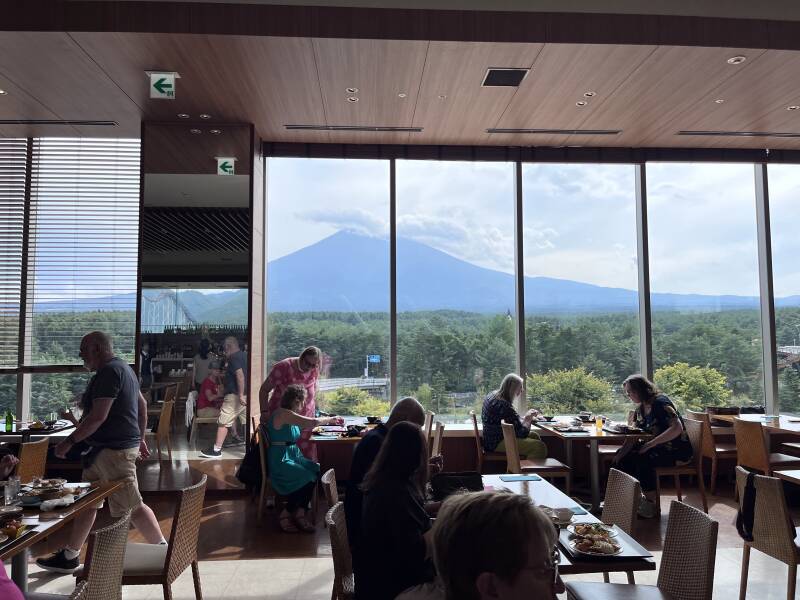
On Thursday September 18th we left Tokyo via bus and headed toward Mt. Fuji. We ate lunch at a hotel buffet with this view of the famous landmark.

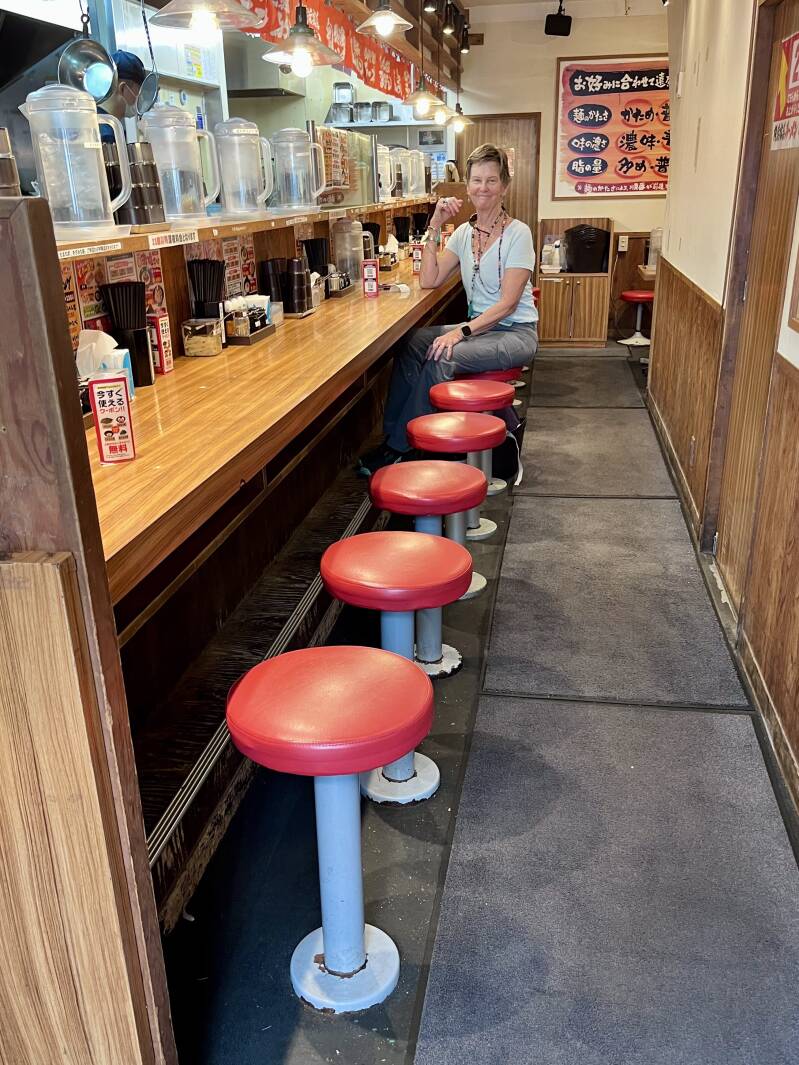
On Monday, September 15th we sadly left Misawa and our friends on a shinkansen (bullet train) to Tokyo Station. There, amidst the chaos, we found a taxi that took us the ten minute drive to our hotel. From there we wandered the neighborhood in search of lunch and found it in this quaint little ramen restaurant. Luckily there were pictures on the menu. We pointed, ordered and were served this delicious looking meal.

One of our overnight excursions took us up into the hatchet part of Honshu Island. In the little town of Kazamaura we found a little restaurant and ordered an afternoon snack of edamame and french fries.
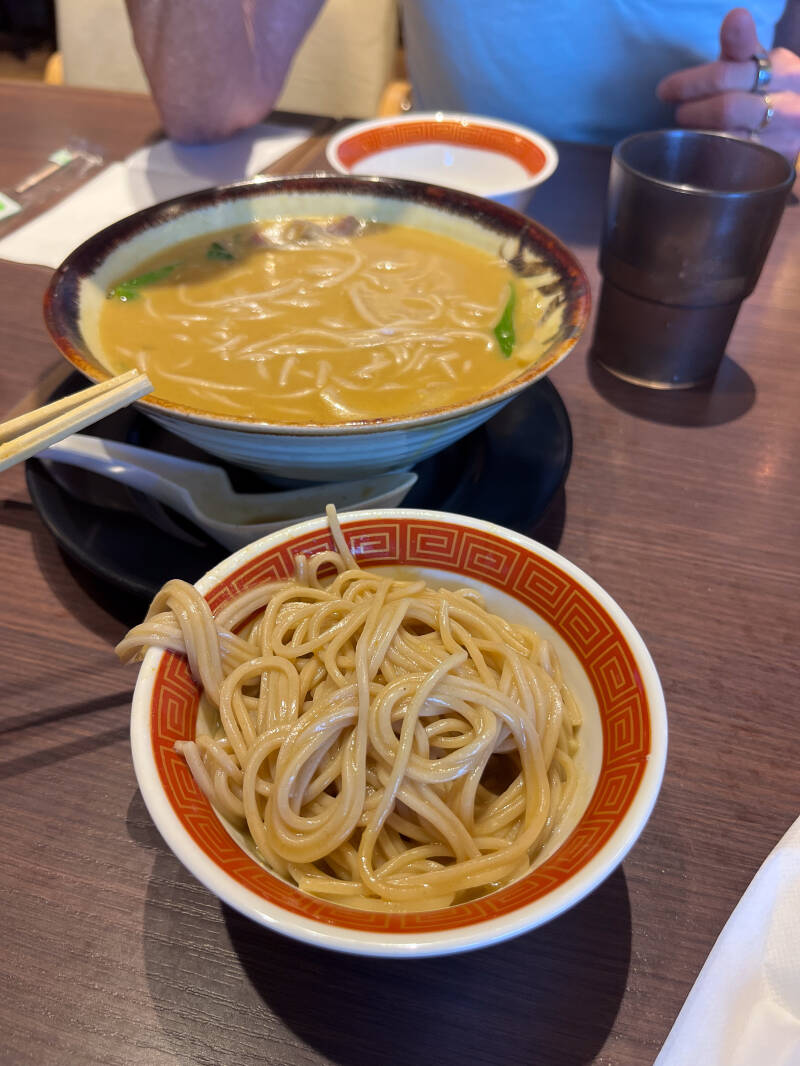
In Aomori City, we had ramen. With this dish and had to use our not very good chopstick skills to put the slippery ramen noodles in the soup.
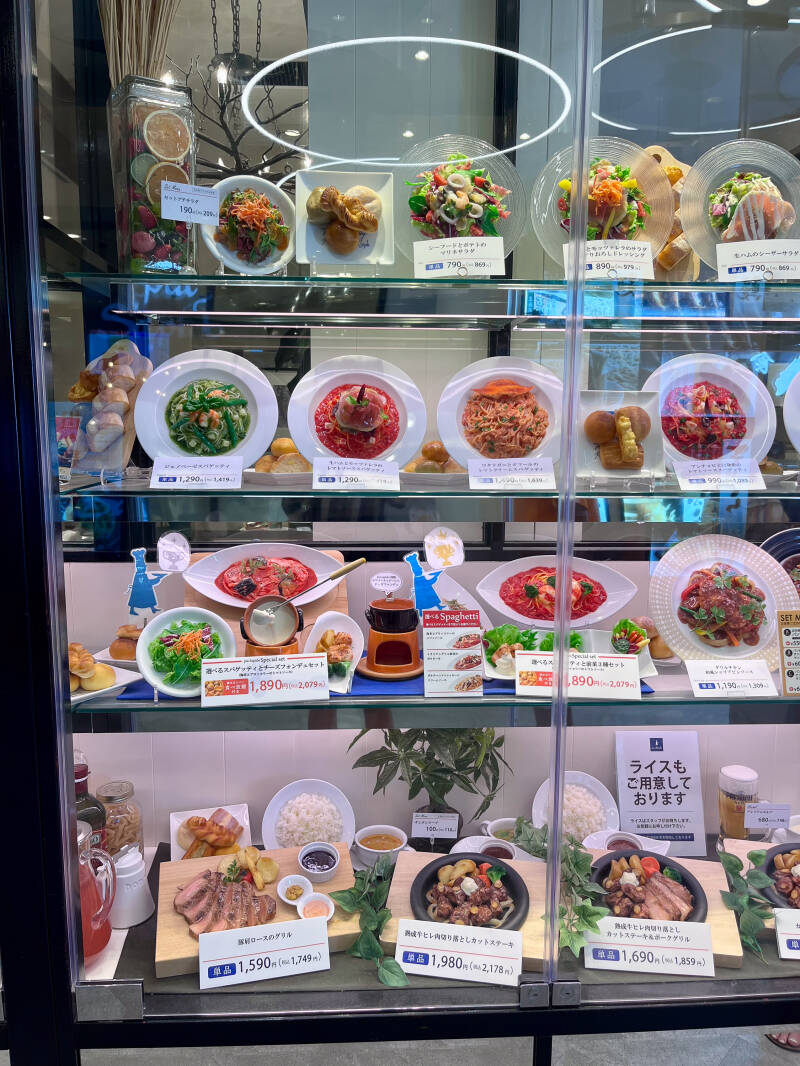
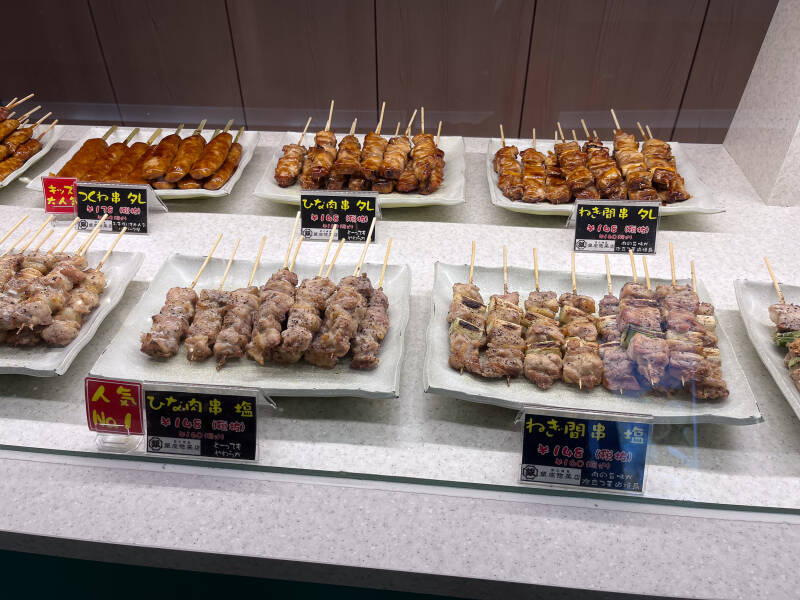
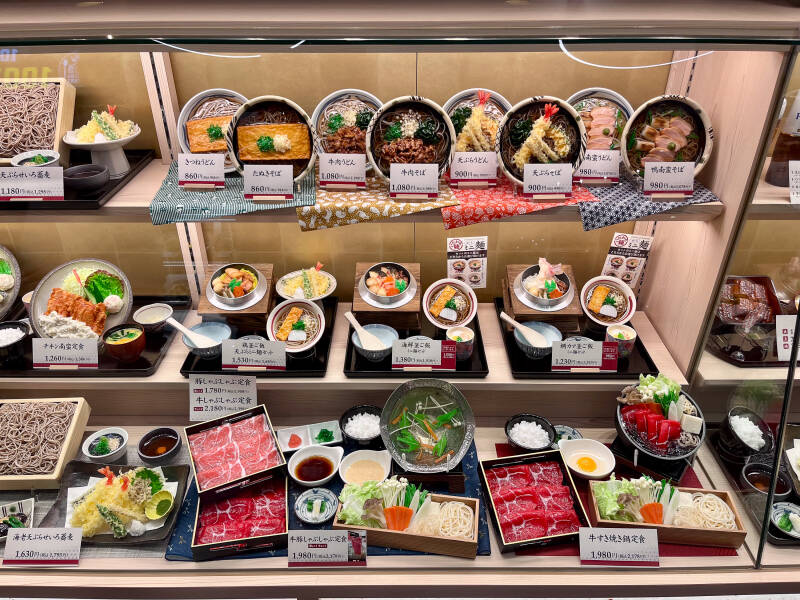
This was new to me but apparently plastic food displays are common in Japan and elsewhere. In the late 1800s, food sellers displayed a plate of real food each day in lieu of a written menu. During the late 1920s, Japanese artisans and candle makers developed food models that made it easy for patrons to order without the use of menus, which were not common in Japan at that time. Paraffin was used to create these until the mid-1980s, but because the colors faded when exposed to heat or sunlight, manufacturers later switched to polyvinyl chloride, which is "nearly eternal".
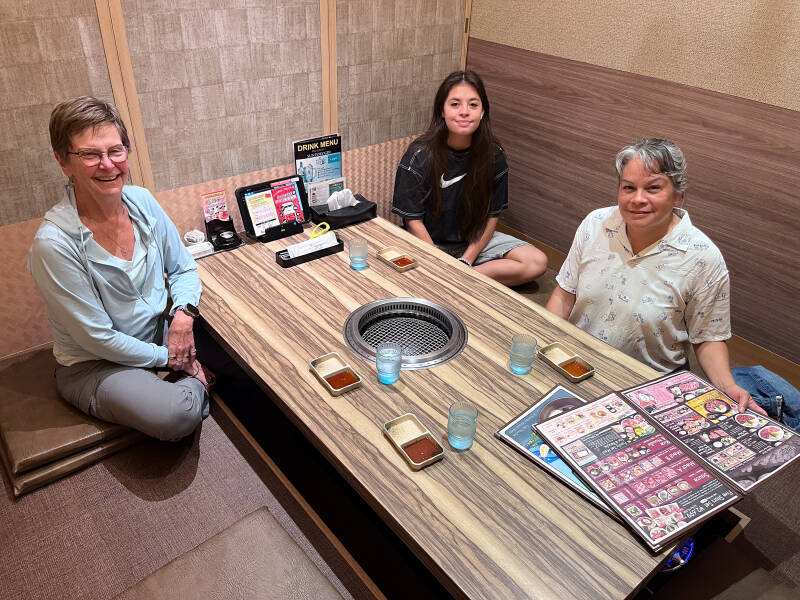
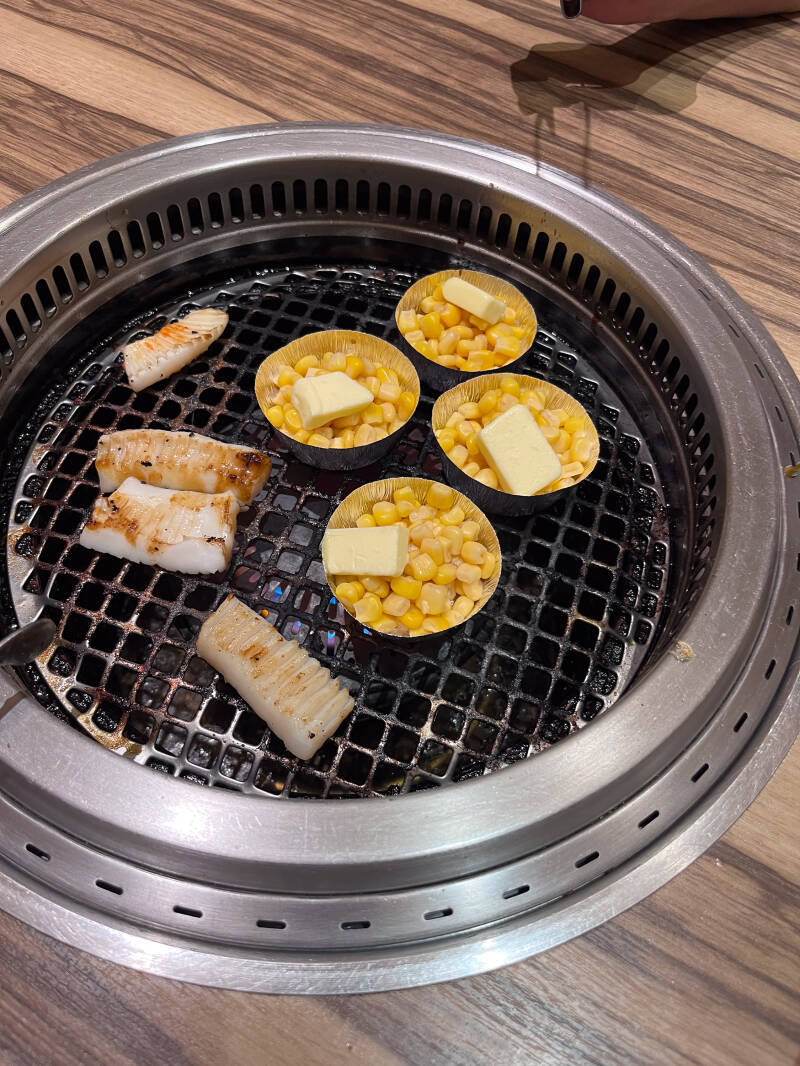
Again, this was new to me, cooking your own food at a table in a restaurant. The present style of yakiniku restaurants are derived from Korean restaurants in Osaka and Tokyo, which opened around 1945 by Koreans in Japan. In a yakiniku restaurant, diners order prepared raw ingredients which are brought to the table. The ingredients are cooked by the diners on a grill built into the table, several pieces at a time. The ingredients are then dipped in sauces before being eaten. It's a private little room and such a fun way to visit. This was our last night with the Nelsons.


Ryokan
Dinner at the ryokan. A ryokan is a type of traditional Japanese inn that typically features tatami-matted rooms, communal baths, and other public areas where visitors may wear provided robes and talk with the owner. Ryokan have existed since the eighth century A.D. Most ryokan offer dinner and breakfast, which are often included in the price of the room. Meals typically consist of traditional Japanese cuisine known, which features seasonal and regional specialties consisting of a number of small, varied dishes.
So that each dish can be enjoyed at the proper temperature, ryokan stress that guests should be punctual for their meals. For this reason, most ryokan ask guests to confirm the time they want to take their meals. Some ryokan have a communal dining area, but most serve meals in the guests' rooms. Our experience was communal, which was perfect so we could watch the locals and see how to eat the food!
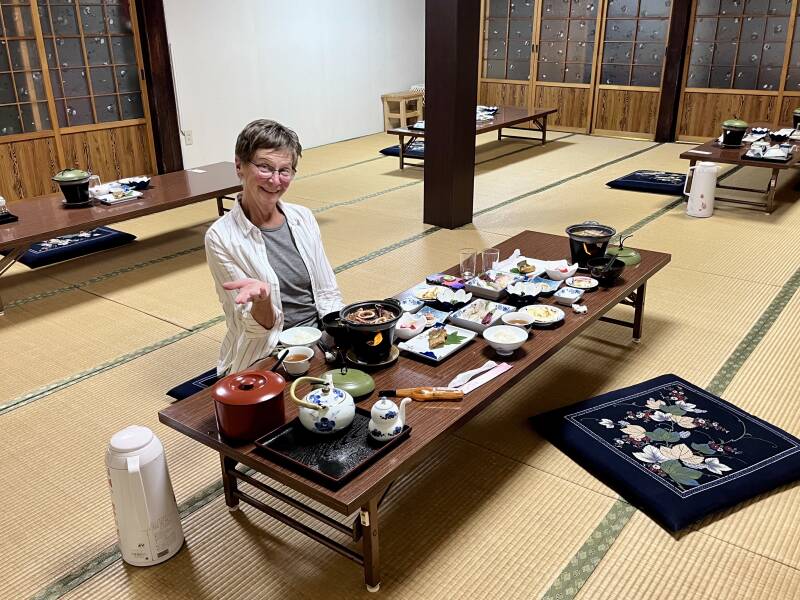
Here's the dinner dining room before the other guests arrived.
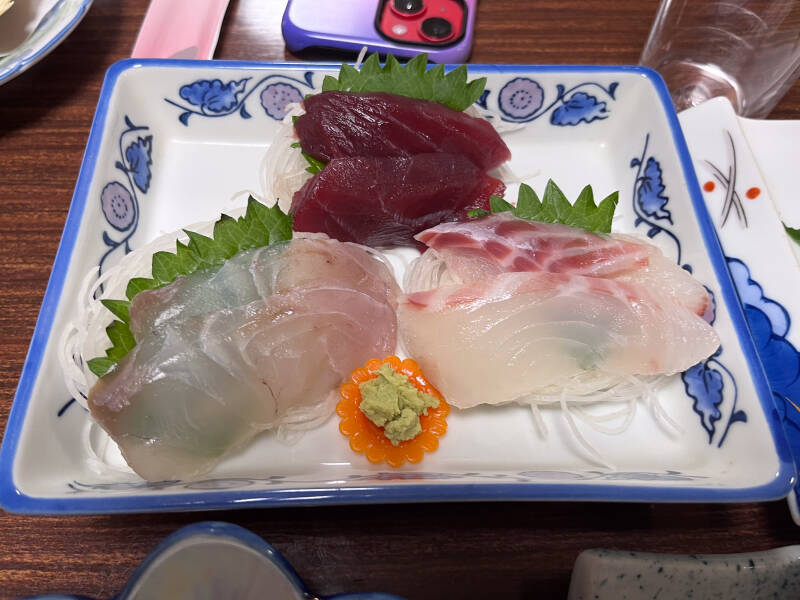
Sushi

Something very salty and cold.
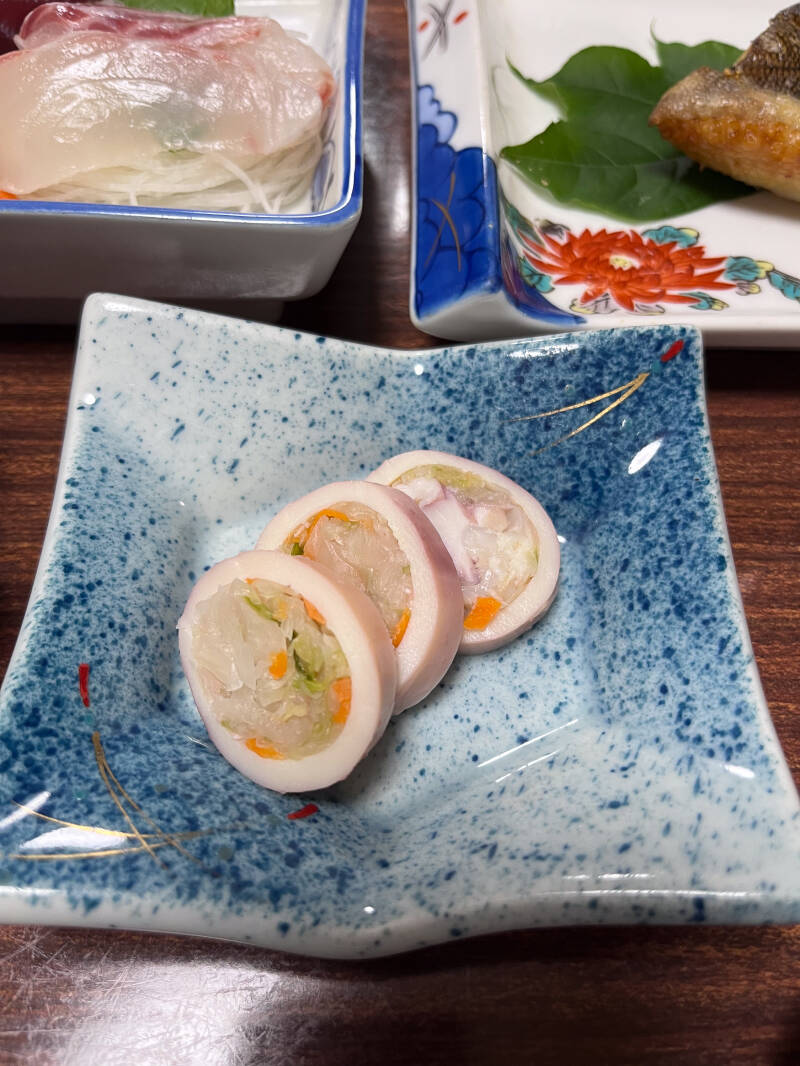
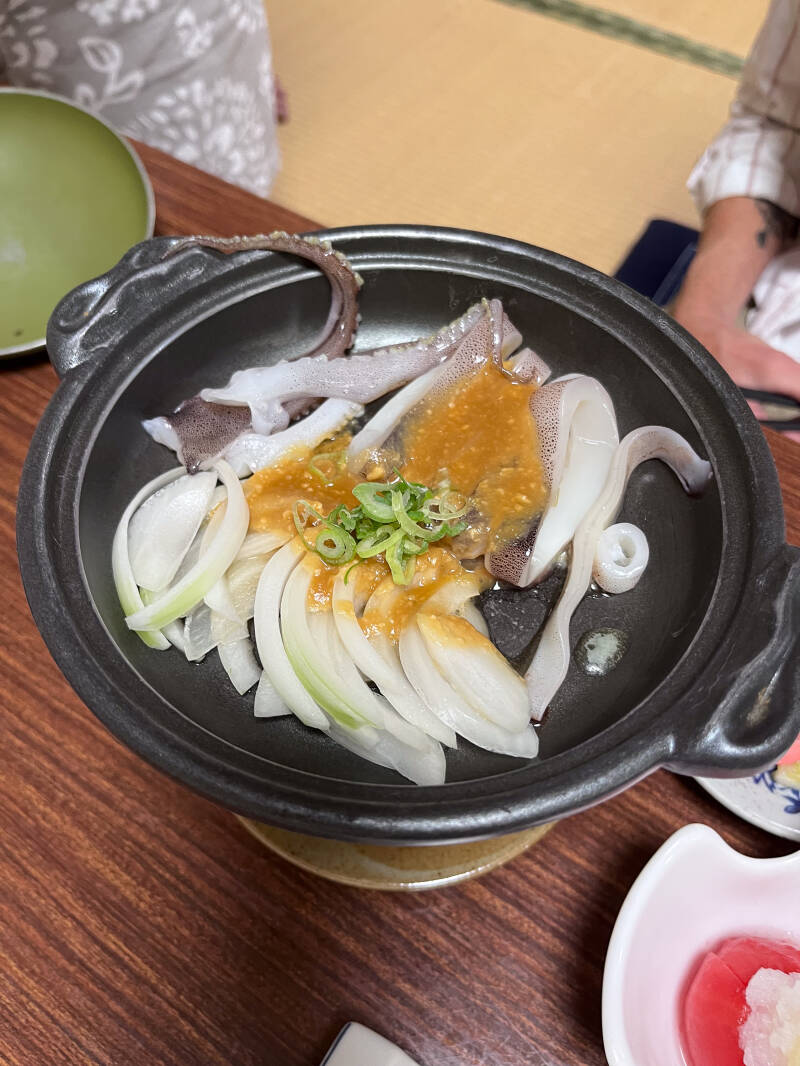
Stuffed...squid?
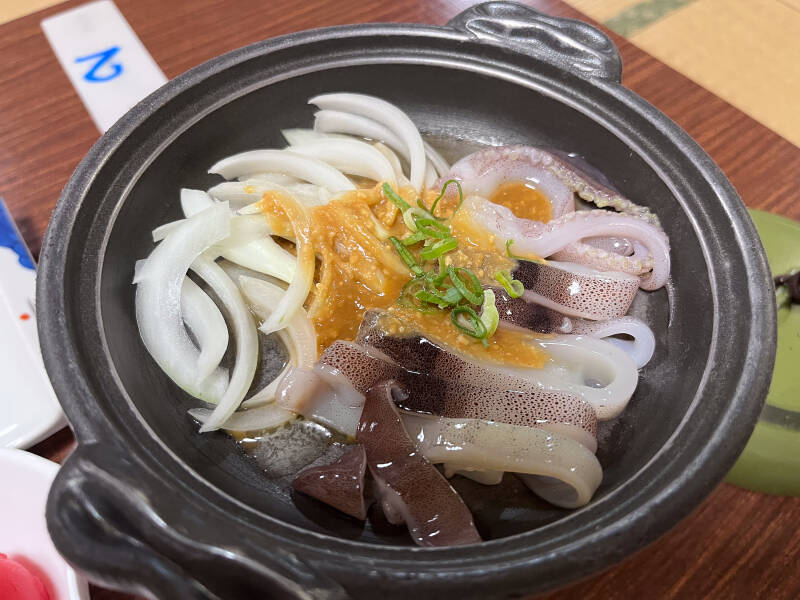
These black bowls were simmering onion and squid.
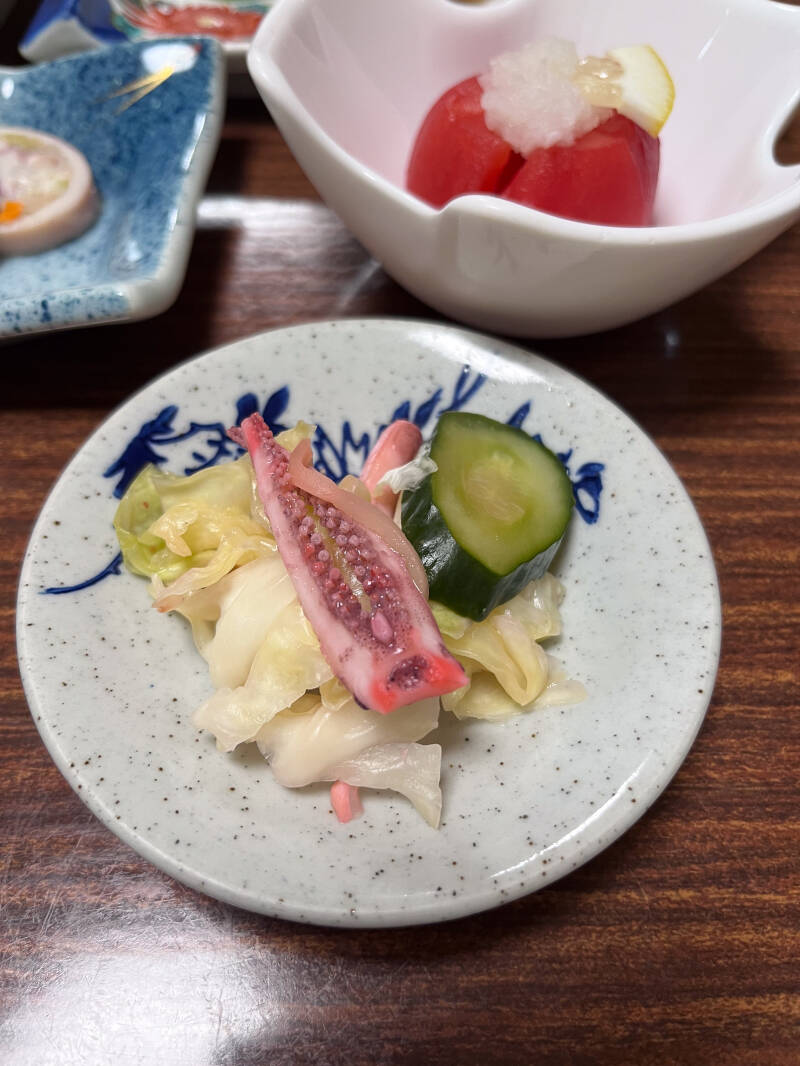
Salad
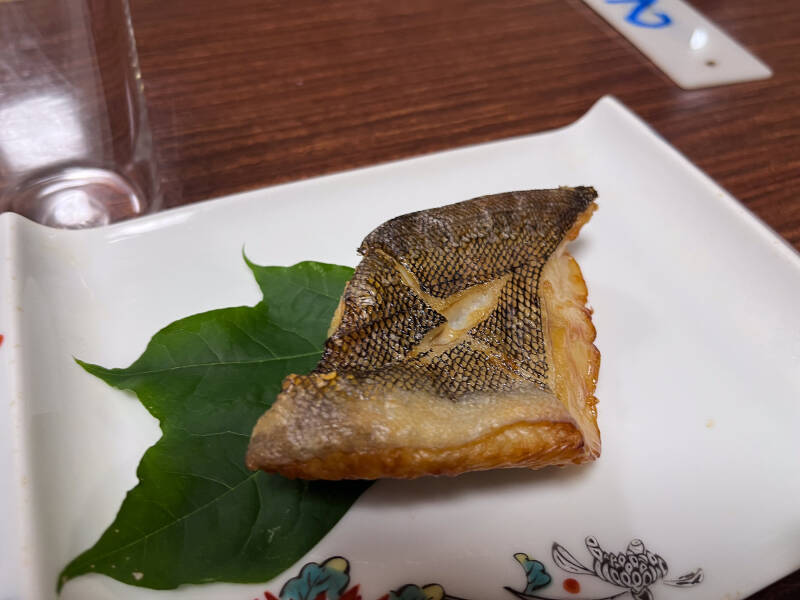
Dried fish.
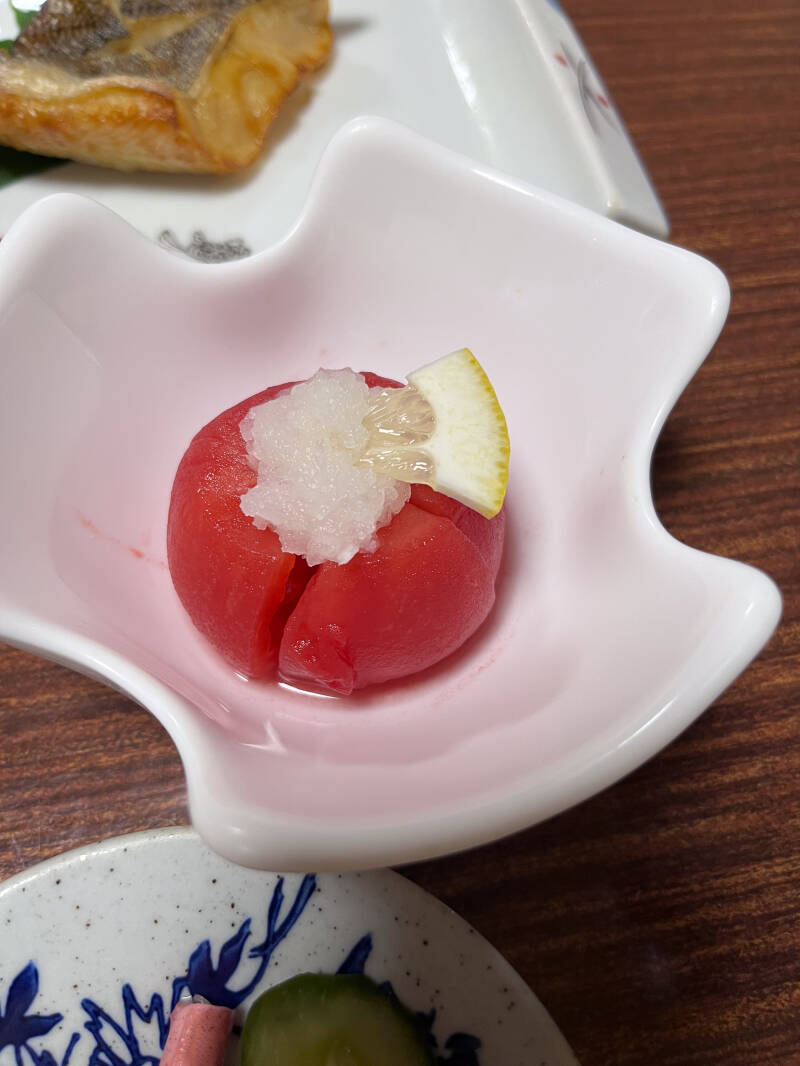
No idea.

Scallop.
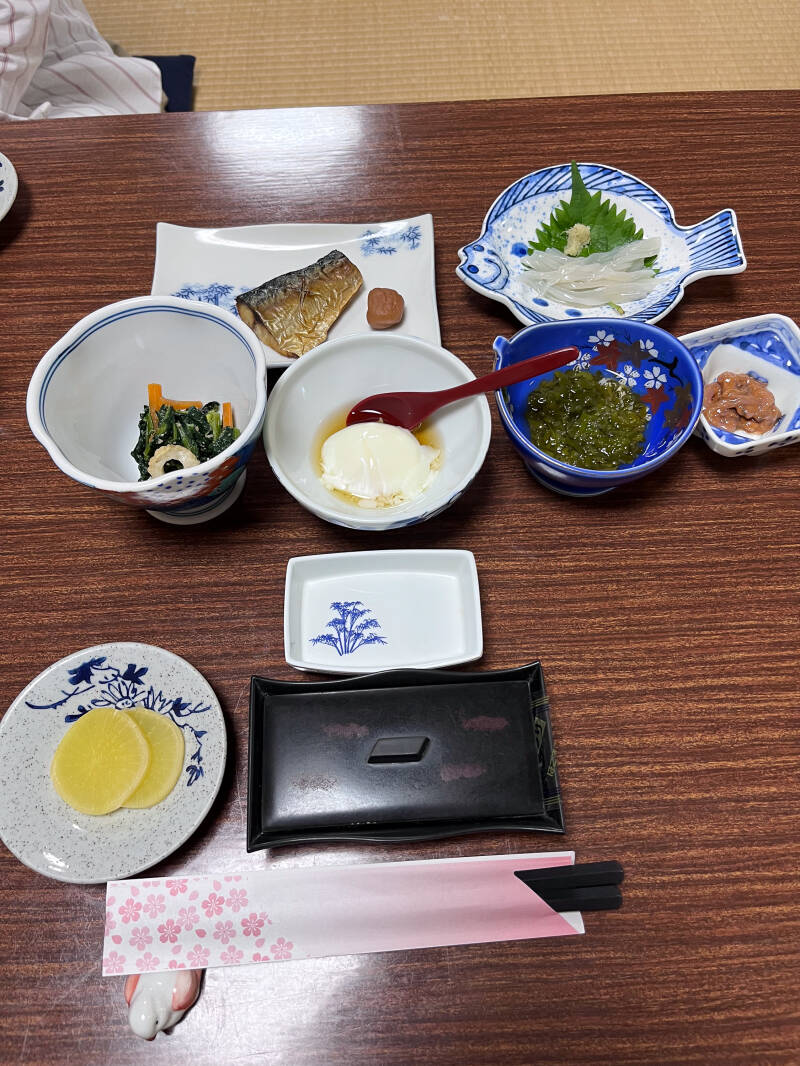
Below is a picture of breakfast. Much the same as dinner but much less options. I could identify the egg, dried fish and vegetables. The rest was a mystery.
Street Food
Much of the street food was purchased from little carts or small shops on the streets on our way to temples, at rest stops or markets. I could have included all of Nishiki Market here but these were more cart oriented.

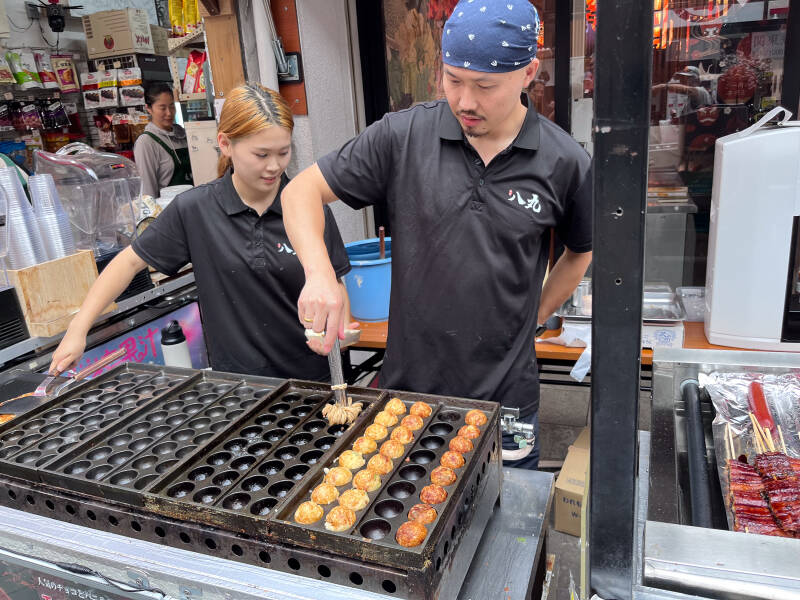
We saw these a few places and I have no idea what they are.


Eating lunch from a konbini on the ground outside the shop. We couldn't find a bench.

Cooking our wagyu meat skewer!


Sweet potatoes were popular.


Ice cream cone!!


At the Misawa Festival our second night! We had a very colorful ice cream cone.


Potato chips on a skewer and in a cup!



A chocolate mochi topped with a strawberry.

Vegetable Stands
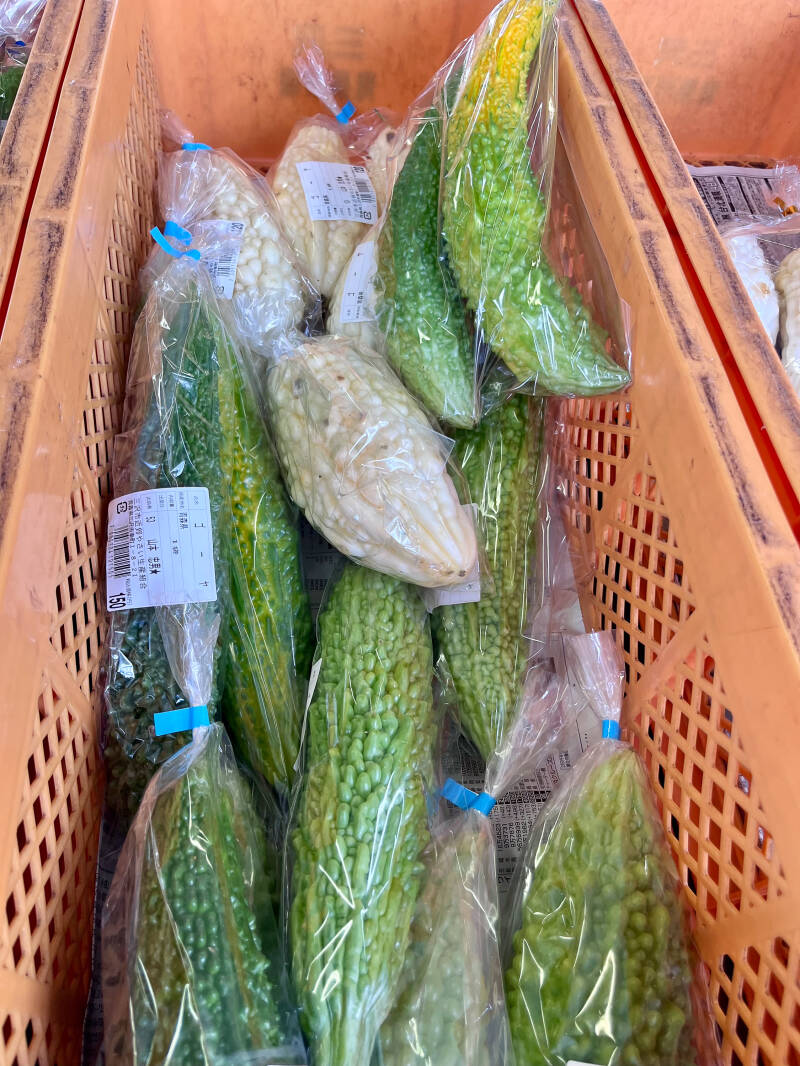
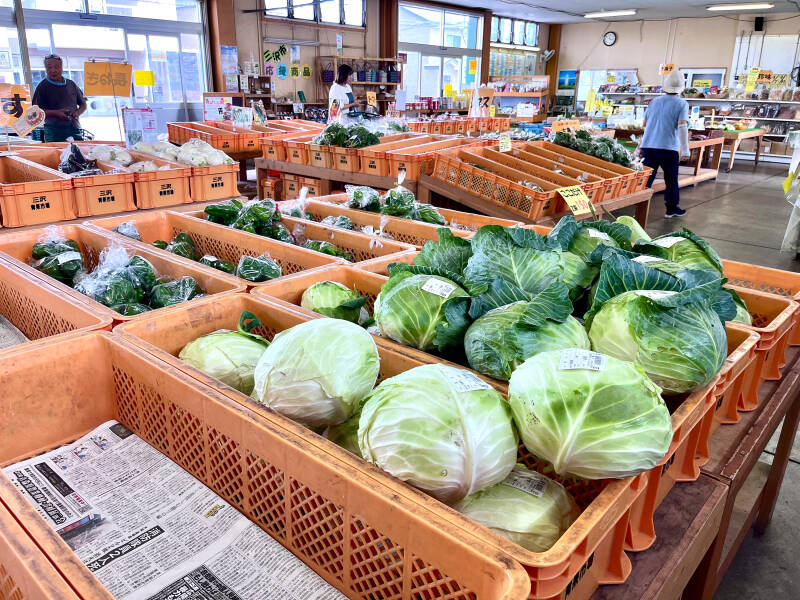
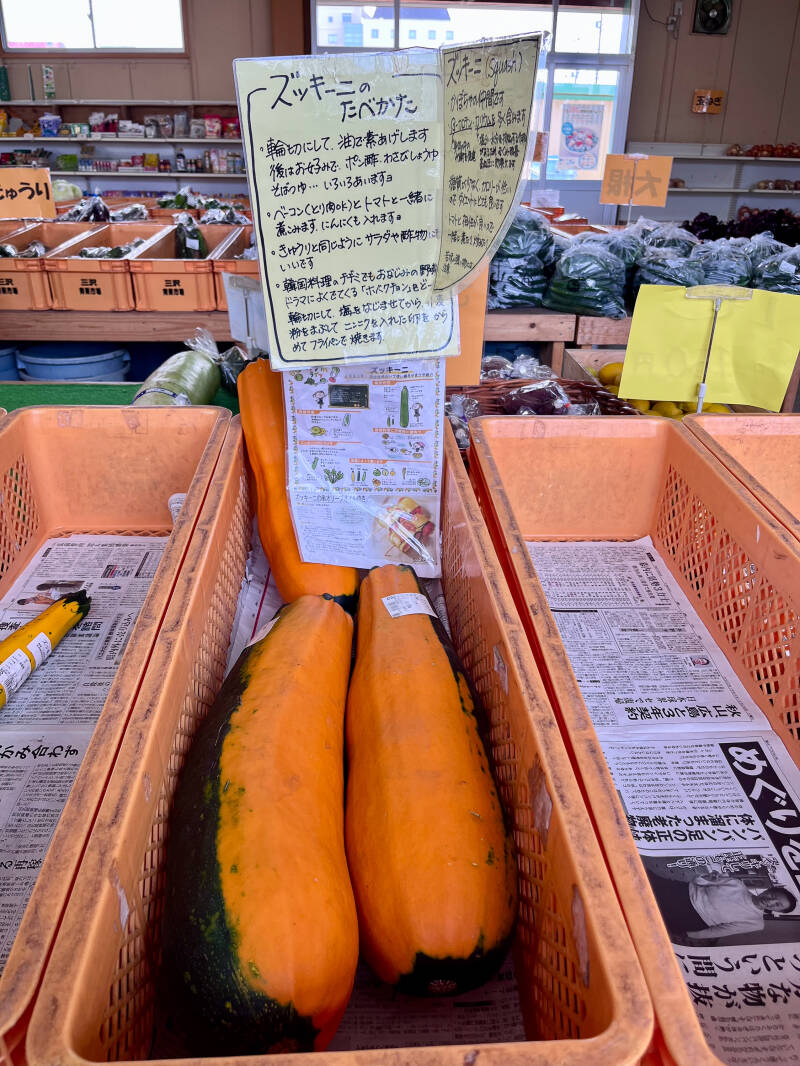
This is an indoor vegetable stand near the air base. It had several things we did not recognize.

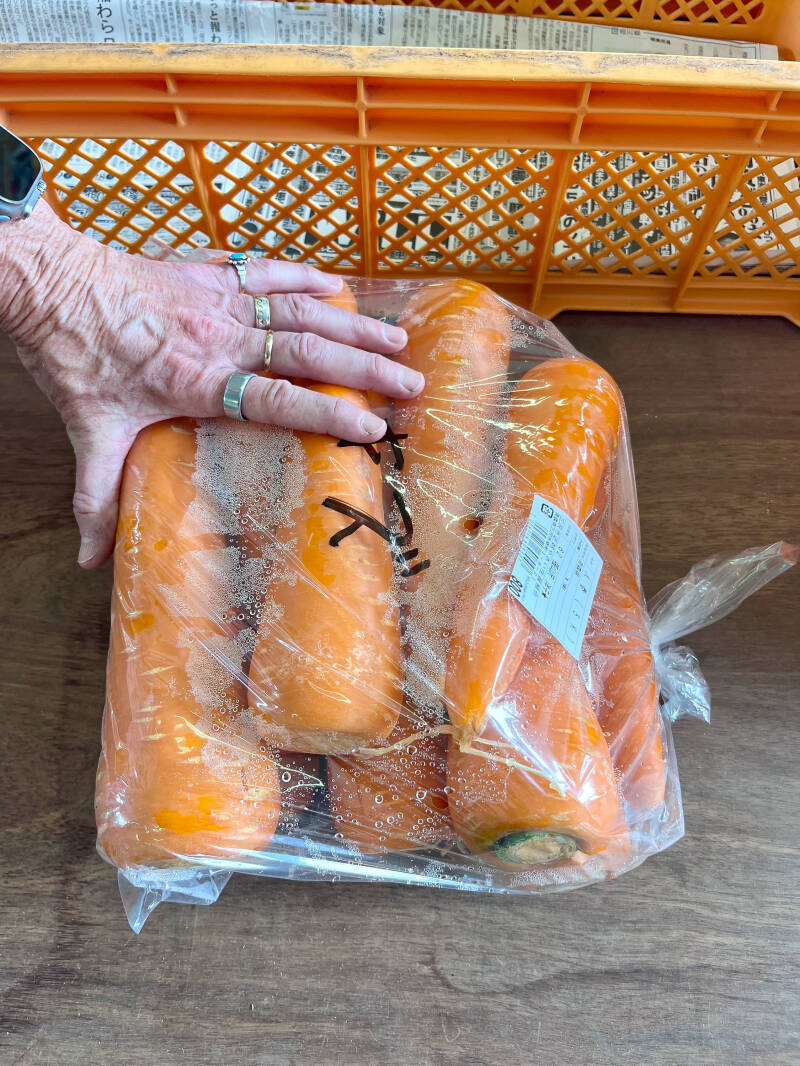
Look at the size of those carrots!!
Vending machines
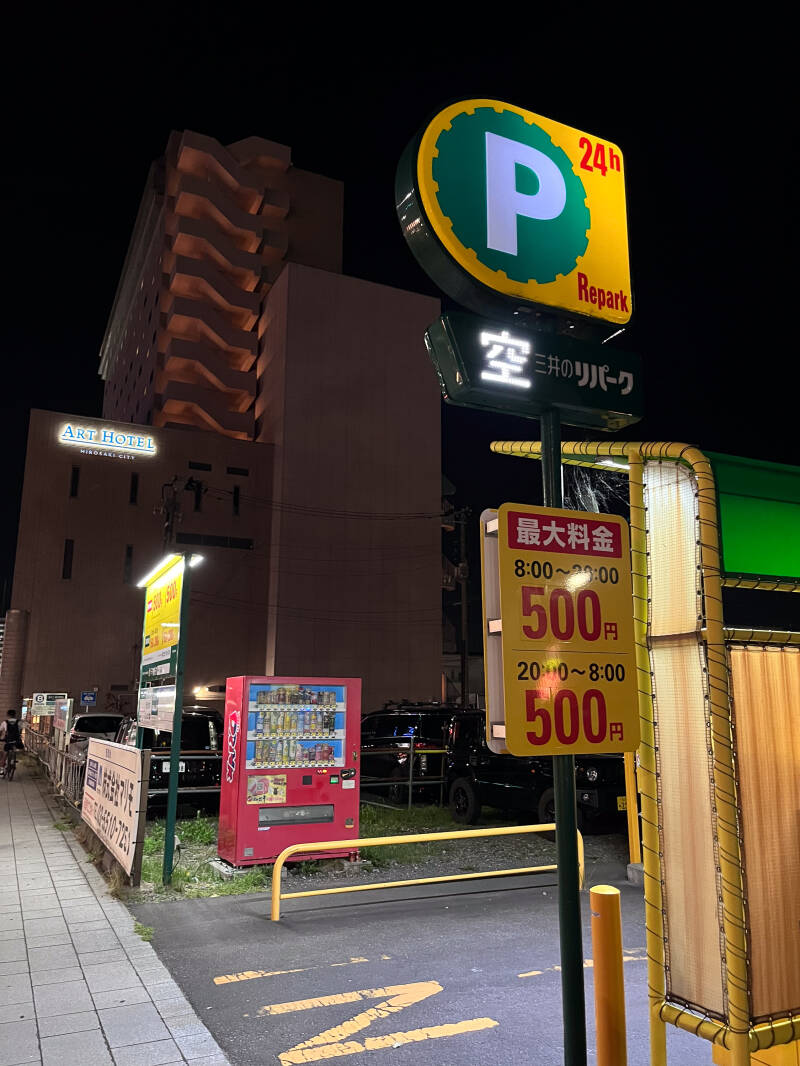
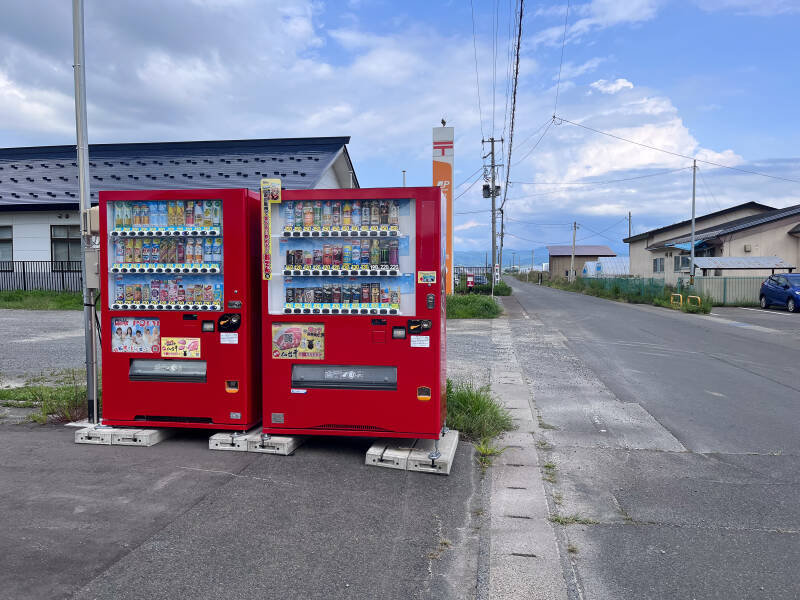
Vending machines are a common sight in Japan. There are more than 5.5 million machines installed throughout the nation, and Japan holds the highest ratio of machines per person for any country in the world with one machine for every twenty-three people. Japanese vending machines provide many services and different kinds of products such as food, smartphones, SIM cards, and even clothing can be found in these machines. I was struck by their random locations as well as what they sell.
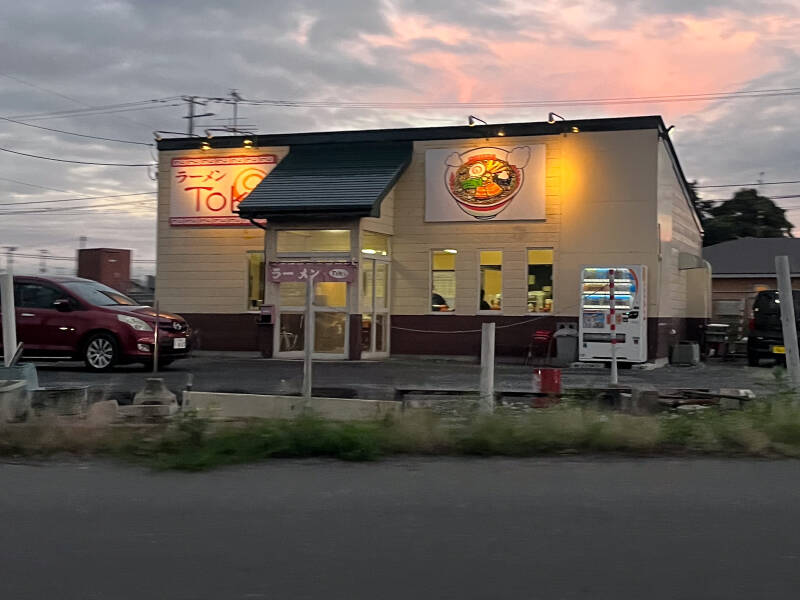
Outside of a restaruant in Misawa.
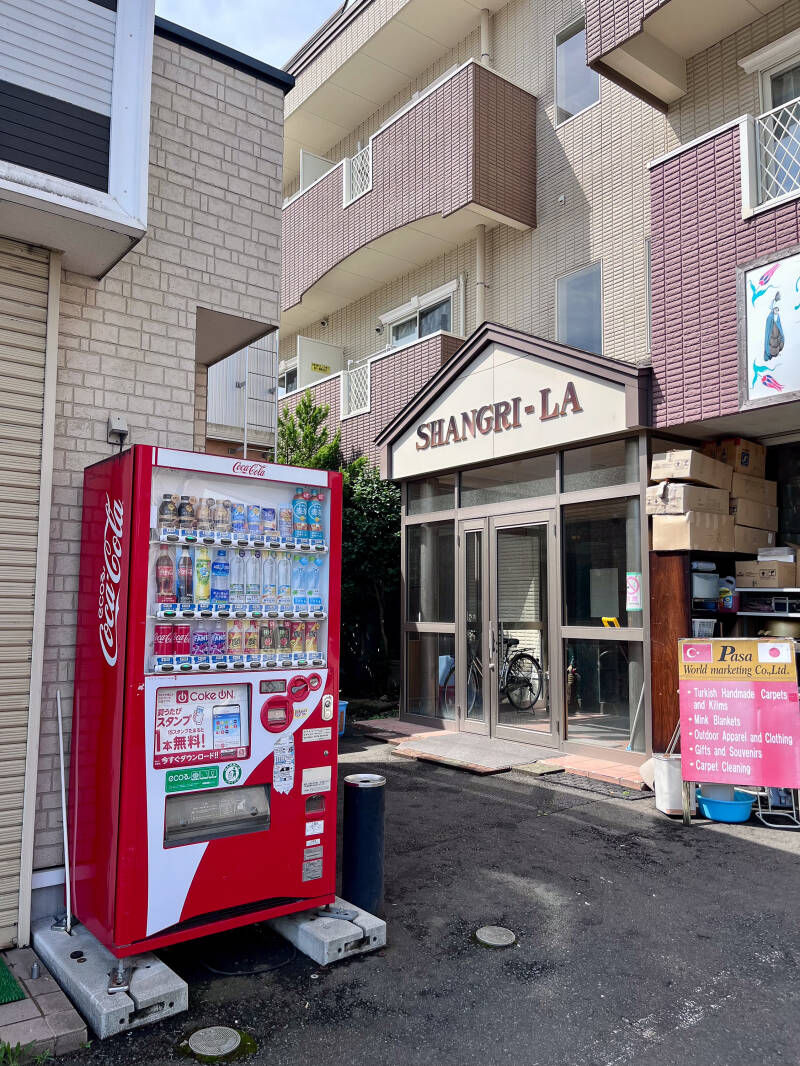
Randomly put beside a building.
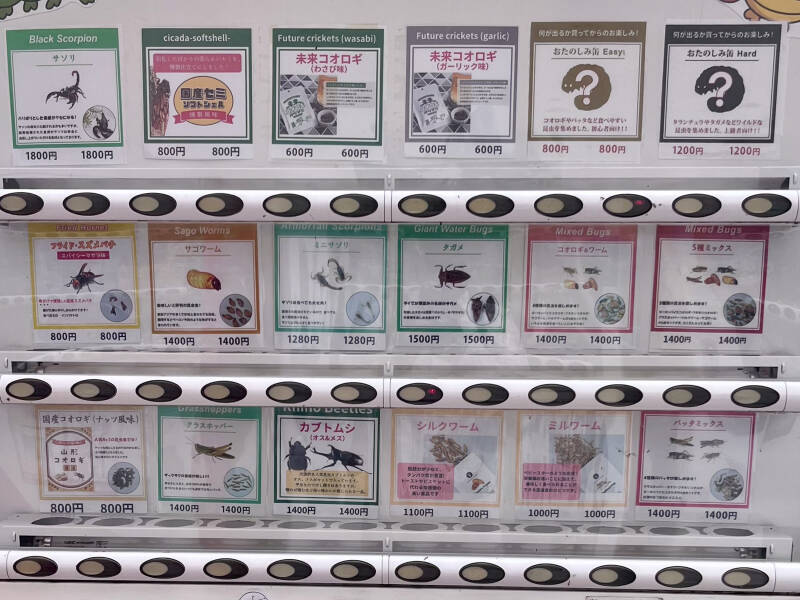
This one is selling bugs.
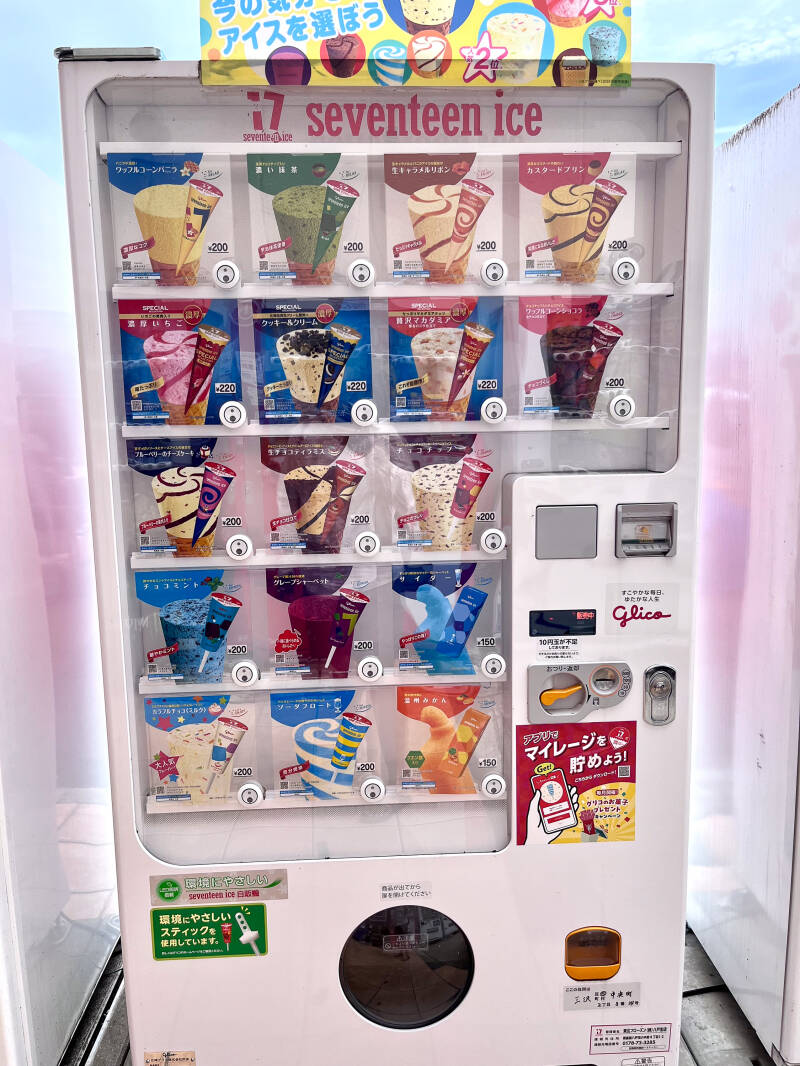
Ice cream!
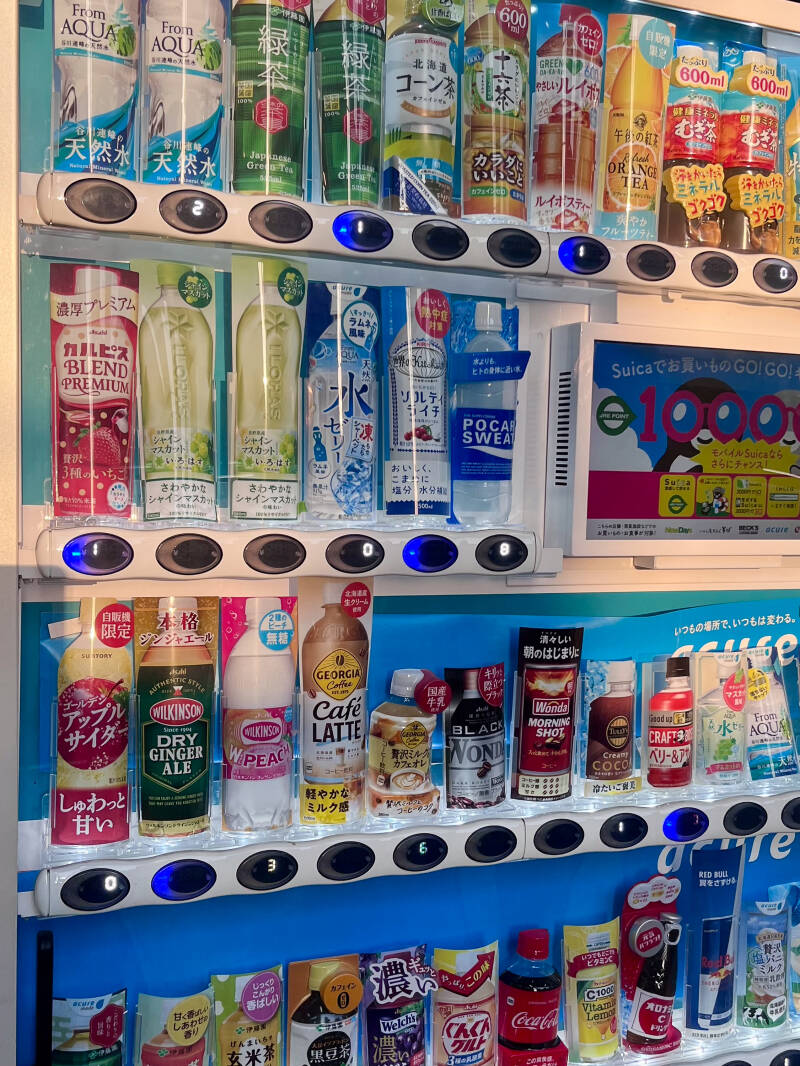
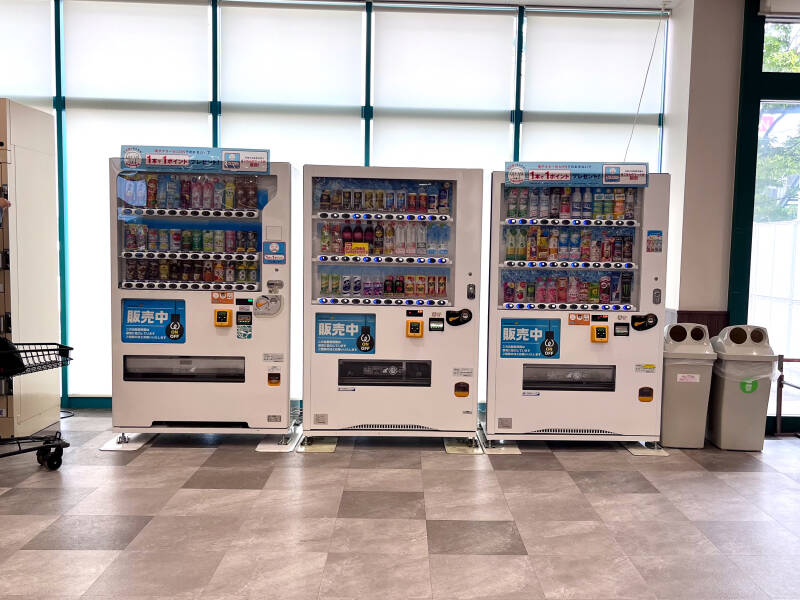
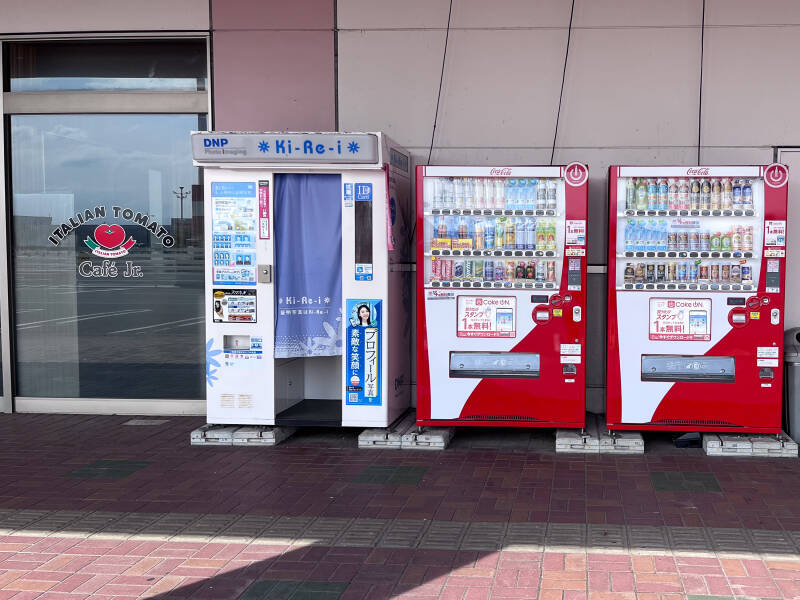
Most of these are drinks: coffee, soda, tea, water. There are SO many.
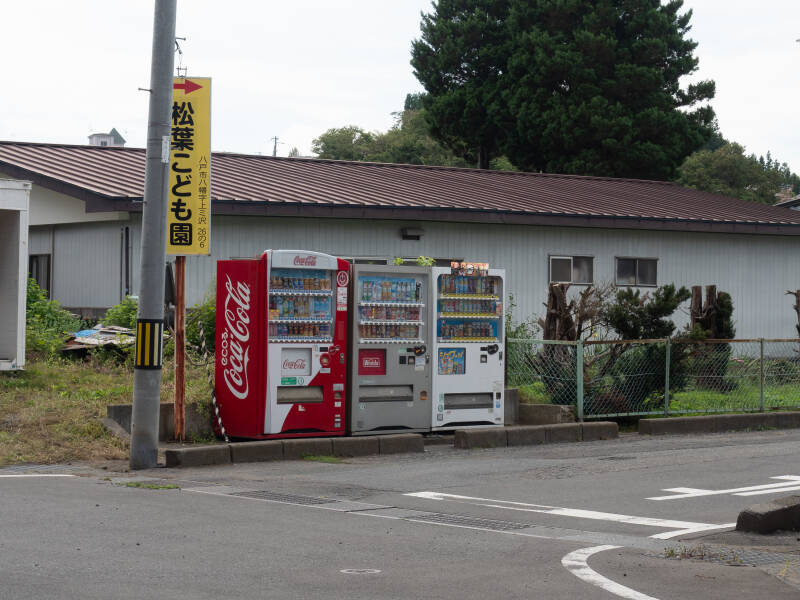
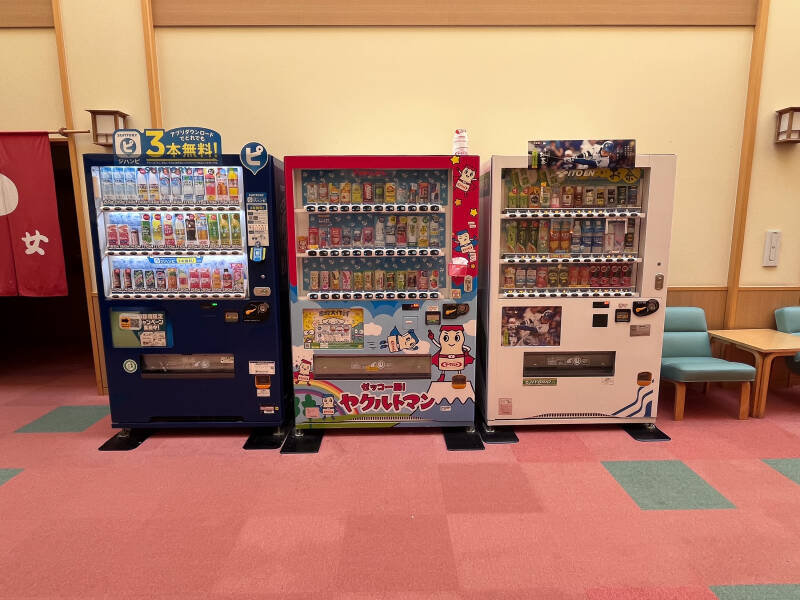
The hallway of an onsen (public hot bath).
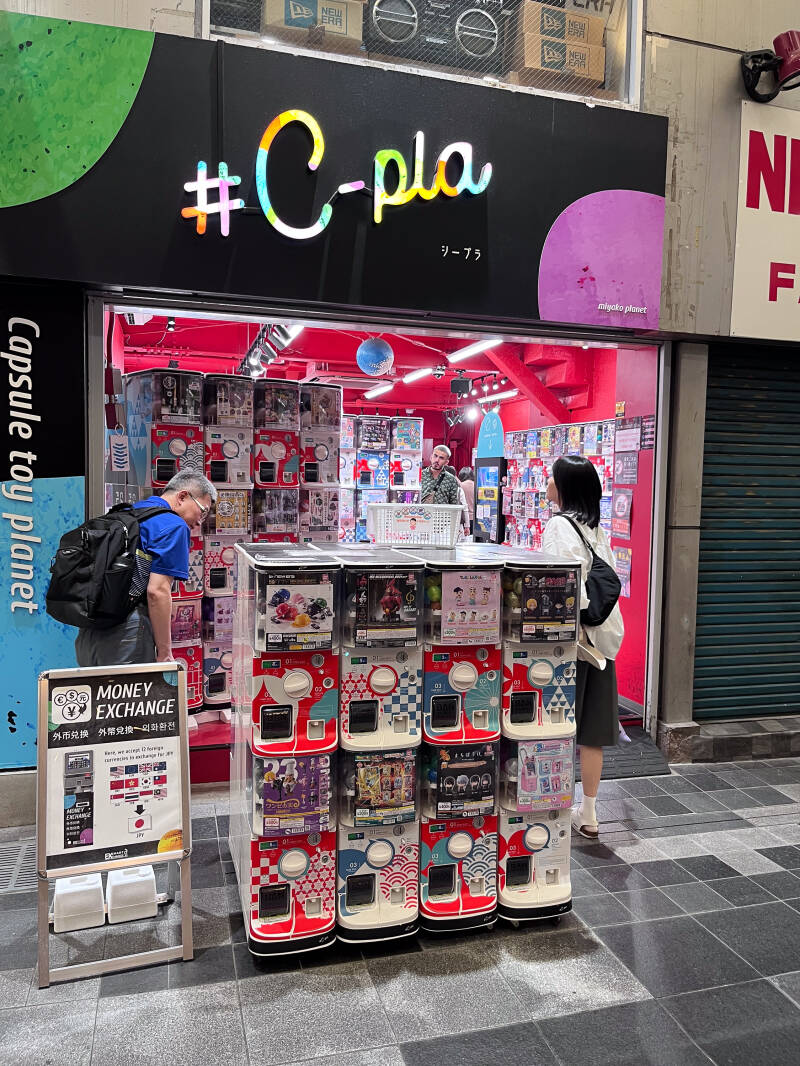
This is an entire store of machines selling little plastic figures and such.
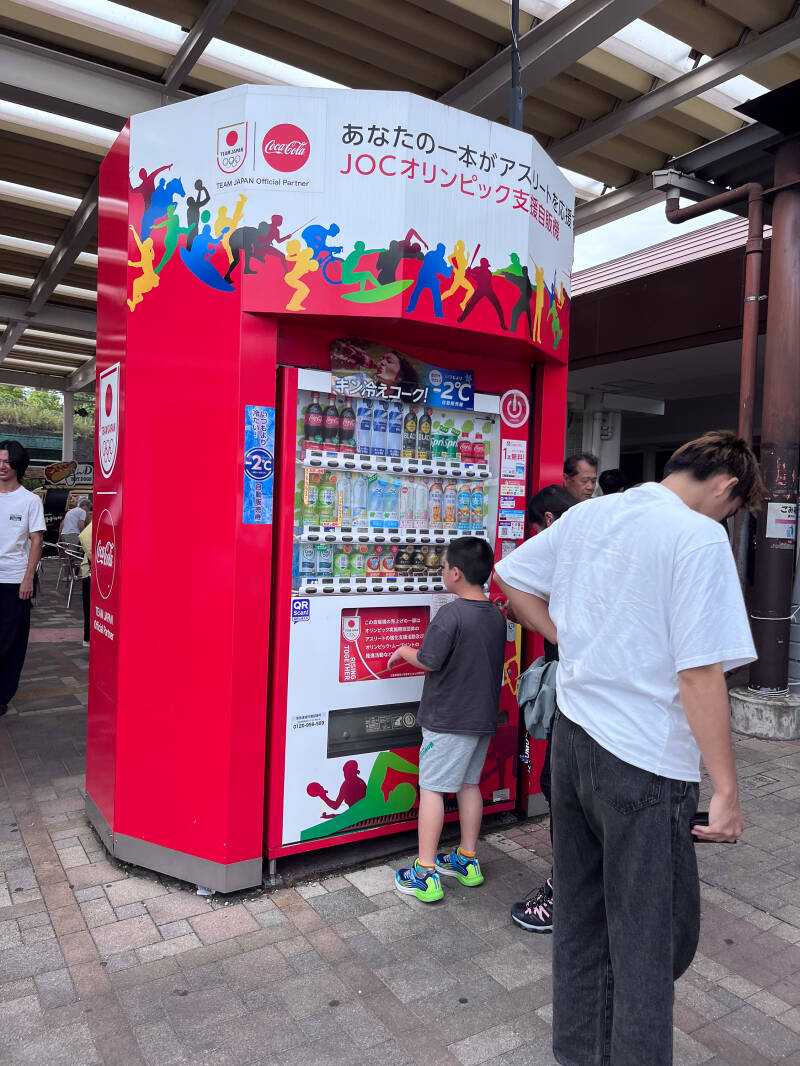
Drinks at a service area.

Our first encounter with one in Tokyo when we landed.
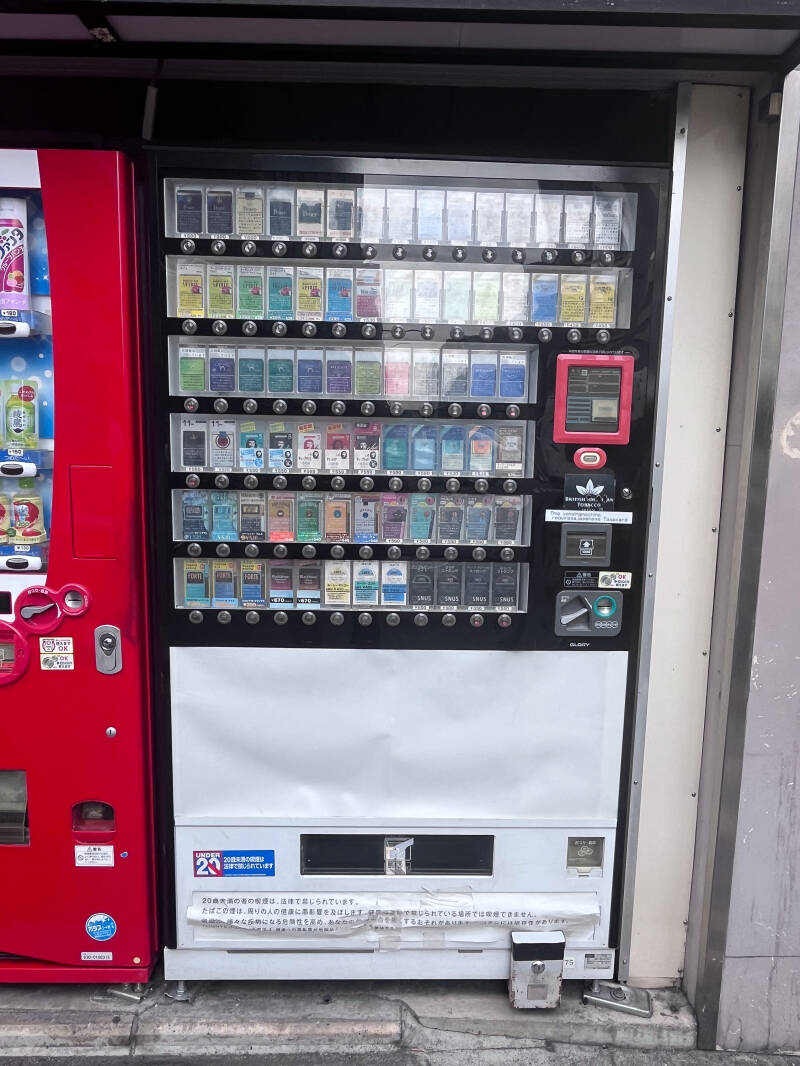
Cigarettes.
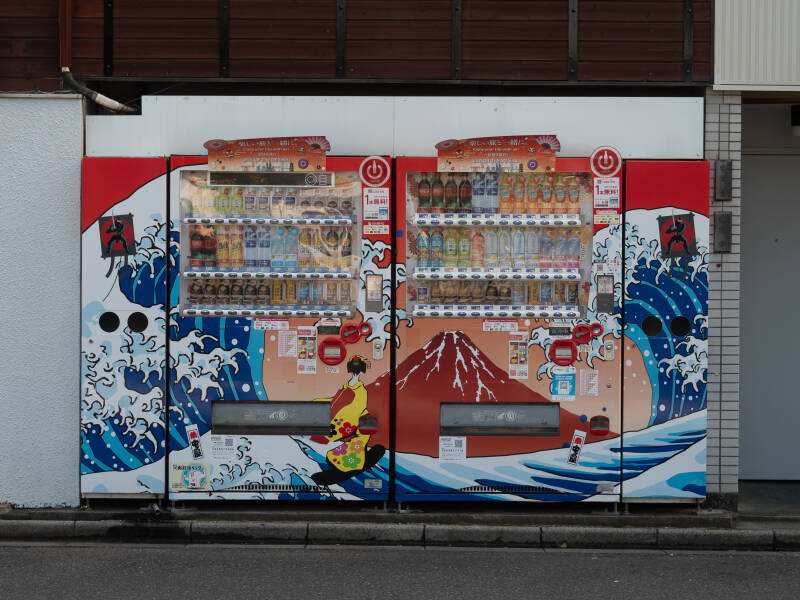
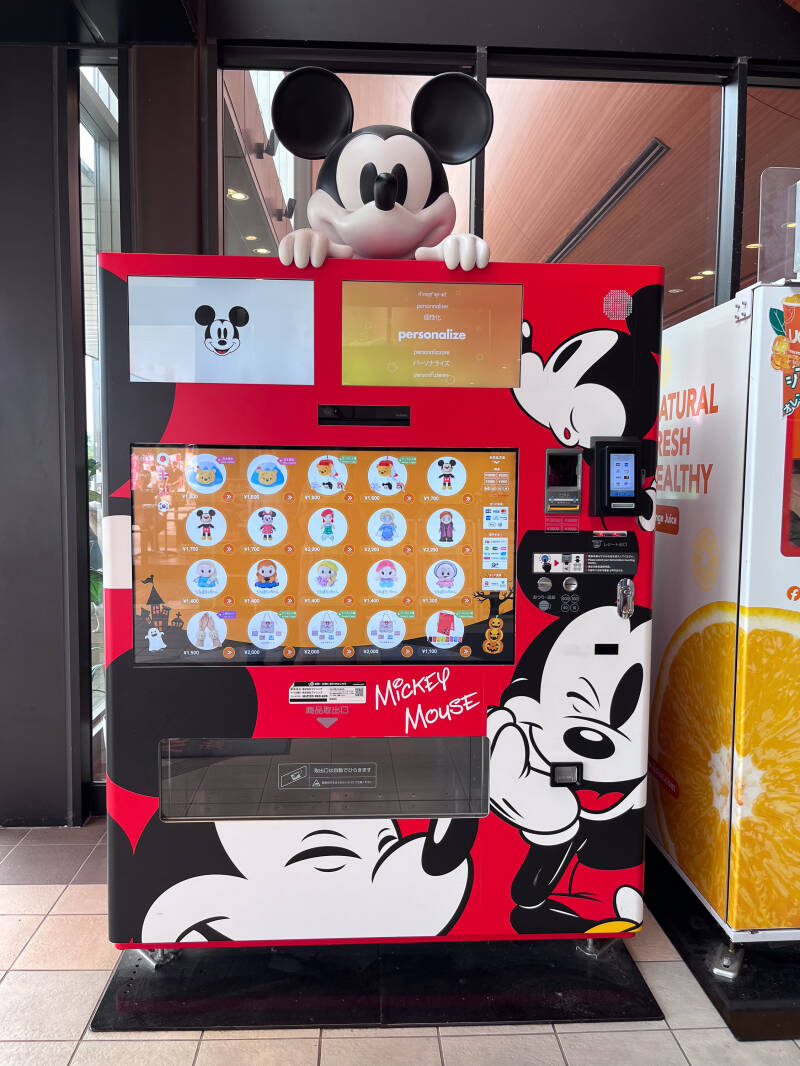
Disney products at a highway service area.

Again, right outside of a restaurant.
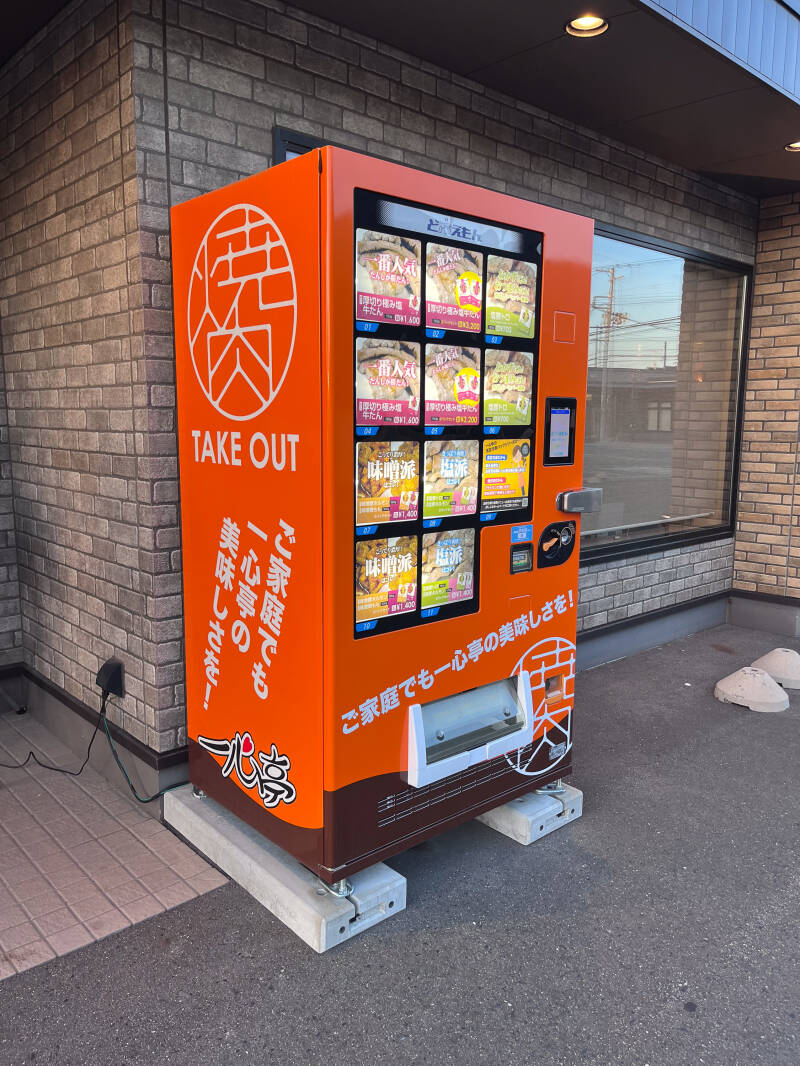
A take-out machine outside of a restaurant.

Randomly near an alley way.
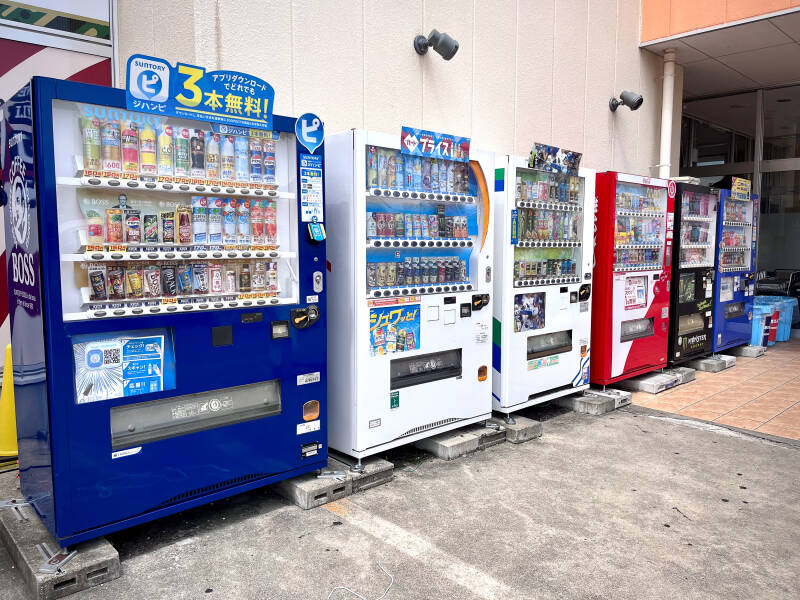
LIned up heading into a grocery store.

Randomly in a lot in the neighborhood we were walking through.

I hope you enjoyed the food tour. As I stated earlier, it barely scratches the surface of our six-week experience. But here's a sampling.
Add comment
Comments
Now I want to go back!!! Loved all your photos!!!
That looks like a wonderful experience. I have not been to Japan yet but it is on my bucket list of places to visit and your wonderful blog just reminded me that I better get moving towards a trip to Japan.
Thanks for sharing!!!!